
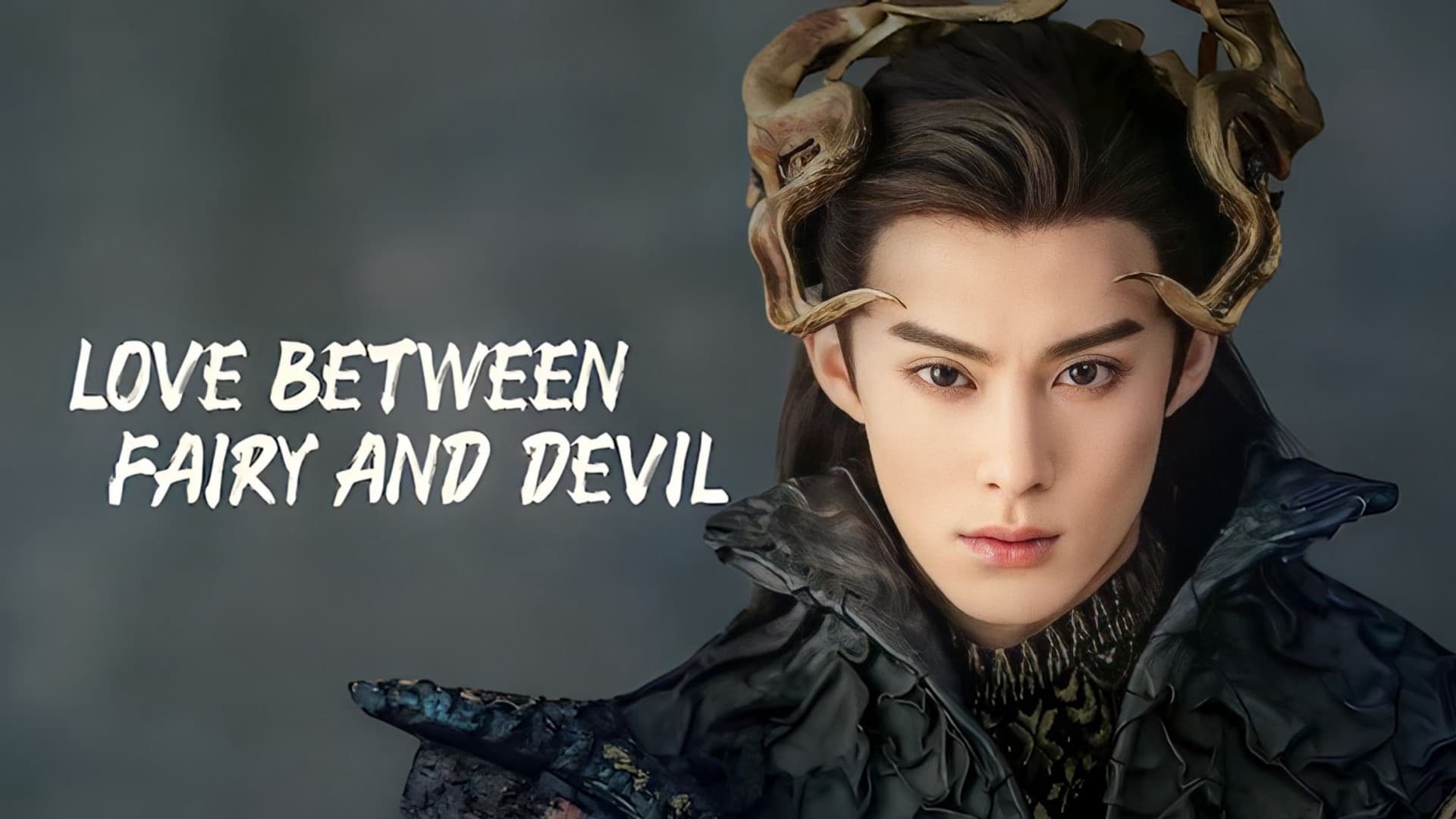
Love Between Fairy and Devil: Why Dongfang Qingcang remains one of xianxia’s most compelling anti-heroes
When Love Between Fairy and Devil premiered in 2022, much of the attention went to its elaborate fantasy world, striking visuals and romance between Xiao Lanhua and Dongfang Qingcang. As the 36-episode drama unfolded, however, it became clear that one of its greatest strengths was Dongfang Qingcang himself.
Played by Dylan Wang, Dongfang Qingcang begins as the immensely powerful Moon Supreme, feared throughout the Three Realms and remembered as a devastating enemy of Shuiyuntian. He is ruthless, arrogant and almost completely disconnected from ordinary emotion.
His bond with Xiao Lanhua does not simply turn him into a kinder romantic hero. Instead, it forces him to confront the enormous personal cost of the power he has spent his life carrying.
That is what makes his story so effective. Dongfang Qingcang is not merely the familiar cold fantasy hero who softens after falling in love. His arc explores power, trauma, family, responsibility and the question of whether strength must come at the expense of vulnerability.
Four years after the drama’s release, he remains one of the most compelling anti-heroes in modern xianxia.
He is not simply the villain who falls in love
Dongfang Qingcang initially appears to fit the role of the dangerous fantasy villain.
He rules the Moon Tribe, commands immense military power and wields Hellfire, making him one of the most feared beings in the Three Realms. He has fought Shuiyuntian and has little interest in accepting the heavenly realm’s ideas of morality.
He also initially regards Xiao Lanhua according to how useful she may be to him.
The drama gradually complicates that picture.
Shuiyuntian sees Dongfang Qingcang as an enemy, while Cangyan Sea sees him as its ruler and protector. The Moon Tribe has its own history, loyalties and grievances, while the supposedly righteous heavenly realm is capable of prejudice and political cruelty.
Dongfang Qingcang can be brutal and authoritarian, but he is not randomly cruel. His actions are usually tied to power, survival, duty or the protection of his people.
That moral complexity is what makes the anti-hero label work.
His emotions were taken from him
One of the most important details about Dongfang Qingcang is often misunderstood.
He did not simply decide that emotions made him weak and remove them.
His father, the previous Moon Supreme, subjected him to brutal training because Dongfang Qingcang had the potential to master Hellfire. To control that power fully, his Seven Emotions had to be severed.
The process destroyed the loving relationship he had once shared with his father.
Dongfang Qingcang grew up believing his father had chosen power and political necessity over him. Eventually, he killed his father, completing the emotional severing that helped transform him into the formidable ruler audiences meet at the beginning of the drama.
Later, he discovers that the truth was more complicated. His father did love him but believed the survival of the Moon Tribe depended on creating a ruler strong enough to protect it.
The series does not ask us to excuse what happened simply because there was a reason for it. Instead, it allows two truths to exist at once: his father acted from a desperate sense of duty, and Dongfang Qingcang was profoundly damaged by what was done to him.
His emotional journey therefore becomes a story of recovering something that was taken from him.
The Seven Emotions Tree makes his inner conflict visible
Inside Dongfang Qingcang’s Sea of Heart stands the Seven Emotions Tree, a literal representation of his emotional life.
At first, the tree is effectively dead.
As his connection with Xiao Lanhua grows, it begins to sprout again.
This creates one of the drama’s most effective links between character development and fantasy mythology because the return of his emotions threatens his ability to control Hellfire.
For Dongfang Qingcang, feeling again is therefore not immediately liberating.
It is dangerous.
He has spent his life believing that emotional emptiness is what allows him to protect his people. Love, compassion and grief seem to threaten the power on which his entire identity has been built.
Xiao Lanhua does not simply awaken romance in him. Her presence destabilises the very system that created the Moon Supreme.
The magical bond forces him to lose control
The early body-swap and emotional-link scenes are often played for comedy, but they serve an important purpose.
Dongfang Qingcang has built his entire identity around control. His magical connection with Xiao Lanhua makes that impossible.
He cannot simply ignore her because harm to her can affect him. Her emotions can intrude upon his experience, and her survival becomes something he must consider whether he wants to or not.
At first, he protects her because doing so protects himself.
That makes the romance more convincing.
Necessity creates proximity. Proximity creates familiarity. Familiarity gradually becomes attachment.
By the time Dongfang Qingcang realises that his concern for Xiao Lanhua is no longer practical, the audience has already watched that emotional shift develop.
His power never disappears from the character
Dongfang Qingcang works because the drama establishes his authority immediately and rarely undermines it.
He is not waiting to prove that he deserves power.
He already has it.
People fear him before he speaks. His subjects recognise his authority and his enemies understand what he is capable of.
Dylan Wang supports this through physical restraint. Dongfang Qingcang often remains still while other characters react around him, creating the impression that he does not need to demonstrate power because everybody already knows it is there.
The vocal performance is also important. In the original Mandarin version, Dongfang Qingcang is dubbed by voice actor Wang Baoshun, whose deeper delivery reinforces the imposing image created by Wang’s physical performance.
As Dongfang Qingcang becomes emotionally softer, the drama does not strip him of authority.
Love changes him without reducing him.
Xiao Lanhua changes far more than his romantic life
It is easy to say that Xiao Lanhua teaches Dongfang Qingcang to love, but her influence is much broader.
She forces him to encounter compassion, grief, fear and affection after centuries of emotional emptiness.
She also challenges the way he judges other people.
Dongfang Qingcang initially sees the world through usefulness, power and duty. Xiao Lanhua cares for people who offer her no strategic advantage and repeatedly places emotional value above political calculation.
Her influence gradually changes the way he interacts not only with her, but with his brother, his people and even the memory of his father.
The romance opens the emotional door, but the consequences spread through every important relationship in his life.
His father is central to understanding him
Dongfang Qingcang’s relationship with his father is one of the drama’s strongest emotional threads.
For years he believes his father destroyed their relationship because power mattered more than love. Once his Seven Emotions begin returning, memories he has been unable to process become painful again.
Eventually, he is forced to reconsider the past.
His father had faced a terrible political choice and believed the survival of the Moon Tribe depended on Dongfang Qingcang mastering Hellfire.
Understanding that does not erase the abuse or trauma.
What it does is allow Dongfang Qingcang to realise that his father had not stopped loving him.
His grief therefore becomes more complicated than mourning someone he lost. He must also mourn the loving relationship he thought had never existed.
His relationship with Xunfeng changes too
Dongfang Qingcang’s younger brother, Xunfeng, provides another example of how emotional suppression damaged his family.
Xunfeng resents him for killing their father and struggles to see him simply as the ruler of the Moon Tribe.
Dongfang Qingcang initially has very little ability to understand that pain.
As his emotions return, so does his ability to recognise what his brother has lost.
Their relationship never becomes overly sentimental, which suits both characters. Instead, resentment, duty and brotherhood gradually begin to coexist.
This is important because it confirms that Dongfang Qingcang’s transformation is not limited to romance.
He is relearning how to have relationships at all.
The drama questions who gets to define good and evil
One of the strengths of Love Between Fairy and Devil is how steadily it undermines the simple idea that Shuiyuntian represents good while the Moon Tribe represents evil.
Dongfang Qingcang begins with the reputation of a monster.
The more time the audience spends in Cangyan Sea, however, the harder that description becomes to sustain.
His people have families, traditions, loyalties and political grievances of their own. Meanwhile, Shuiyuntian’s adherence to rules and hierarchy does not make every decision morally just.
The drama does not erase Dongfang Qingcang’s violent past.
Instead, it gives that past context.
Belonging to the Moon Tribe does not automatically make someone evil, just as belonging to Shuiyuntian does not automatically make someone righteous.
That complexity is central to Dongfang Qingcang’s anti-hero status.
Duty matters as much as love
Dongfang Qingcang does not experience rulership as personal freedom.
He experiences it as responsibility.
Generations of conflict have placed the survival of the Moon Tribe partly on the shoulders of the Moon Supreme, which explains why the return of his emotions frightens him so much.
If emotion causes him to lose Hellfire, he may lose the power he believes is necessary to protect Cangyan Sea.
This creates a much stronger conflict than simply choosing between power and romance.
He has to reconcile personal emotional growth with political duty.
The series wisely refuses to solve this by having him abandon everything for Xiao Lanhua.
Even after falling in love, he remains deeply committed to his people.
He does not turn into Changheng
Changheng provides a useful contrast.
He represents the more conventional heroic figure: disciplined, honourable and closely connected to Shuiyuntian’s values.
Dongfang Qingcang never becomes another version of him.
His growth does not involve accepting that the heavenly realm was correct all along.
He remains proud, decisive and capable of ruthlessness when circumstances require it. What changes is his ability to understand the emotional consequences of his choices.
The character develops without being replaced.
That distinction is essential to the success of his arc.
Emotion eventually changes the nature of his power
For much of the drama, Dongfang Qingcang appears to receive confirmation of everything he was taught as a child.
As his emotions return, his control over Hellfire becomes uncertain.
Feeling seems to make him weaker.
The finale challenges that idea by giving him access to a different kind of power connected to compassion and emotional experience.
This completes the argument built into his story.
Dongfang Qingcang was taught that strength required emotional emptiness.
His later transformation shows that emotion itself is not weakness. It simply produces a different kind of power.
The fantasy mythology therefore develops alongside the character rather than existing separately from him.
Xiao Lanhua changes as much as he does
Although Dongfang Qingcang’s transformation receives enormous attention, the central relationship works because Xiao Lanhua also changes.
She begins as an apparently insignificant fairy with limited status and power.
Her experiences with Dongfang Qingcang force her to question assumptions she inherited about the Moon Tribe and the supposed moral simplicity of the conflict between the realms.
She gradually discovers her own strength, identity and responsibility.
Dongfang Qingcang learns vulnerability while Xiao Lanhua becomes increasingly capable of confronting difficult truths and accepting enormous responsibility.
Neither simply fixes the other.
Their relationship works because both become larger versions of themselves.
Grief completes his emotional awakening
One of the most important moments in Dongfang Qingcang’s arc comes after Xiao Lanhua’s sacrifice.
For someone who once existed without the Seven Emotions, grief represents the full cost of becoming capable of love.
His emotional restoration gives him joy and connection, but it also gives him the ability to experience devastating loss.
The drama does not present that pain as evidence that emotion was a mistake.
Instead, grief becomes part of being emotionally complete.
Dongfang Qingcang has reached the point where he would rather endure profound pain than return to the emptiness that once protected him from it.
That is a much deeper transformation than simply showing him becoming affectionate.
His sacrifice works because he keeps his agency
The final confrontation with Tai Sui brings together the central ideas surrounding Dongfang Qingcang.
He deliberately allows Tai Sui to enter him as part of the strategy to destroy it.
His sacrifice is not punishment for his earlier actions, nor is it a last-minute attempt to prove that he has become good.
By that point, his transformation has already happened.
The importance of the moment lies in his choice.
The ruler who once organised his life around strength and survival willingly risks his own existence to protect Xiao Lanhua and the wider world around them.
He remains active rather than passive.
Even in sacrifice, Dongfang Qingcang retains the agency that has defined him from the beginning.
The ending is not permanently tragic
His sacrifice is not the final word on his story.
Xiao Lanhua preserves what remains of him through the Bone Orchid and waits for his return.
Five hundred years later, Dongfang Qingcang reappears.
The reunion is brief, but the outcome is clear: their story ends with restoration rather than permanent separation.
There is also a satisfying reversal in this ending.
Earlier, Dongfang Qingcang dedicates himself to restoring Xiao Lanhua after losing her.
In the finale, she becomes the one who waits for him.
Dylan Wang’s restraint helps sell the transformation
Dongfang Qingcang became a defining role for Dylan Wang partly because the performance depends on control rather than constant intensity.
The early version of the character communicates power through posture, stillness and carefully limited expression.
That makes the later changes easier to see.
A hesitation becomes meaningful. A glance towards Xiao Lanhua carries more weight. Concern appears before Dongfang Qingcang is willing to admit that concern exists.
The body-swap scenes are especially effective because they reveal how much of his normal identity depends on restraint. Wang suddenly has to reflect elements of Xiao Lanhua’s personality while remaining physically recognisable as the Moon Supreme.
The contrast makes both performances more noticeable.
His masculinity is more interesting than simple dominance
Dongfang Qingcang is often celebrated as a dominant and powerful fantasy male lead, but that is only the starting point.
The more interesting question is what happens when the drama separates strength from emotional numbness.
As a child, he is taught that vulnerability must be destroyed if he wants to become powerful enough to protect his people.
As an adult, he discovers that tenderness, grief and love do not prevent him from being strong.
The series does not replace one model of masculinity with another.
Instead, it asks why authority and emotional openness were ever assumed to be incompatible.
That gives his development more depth than the familiar “cold man softened by love” trope.
His story becomes clearer when compared with the other men around him
Dongfang Qingcang is not the only character exploring love, duty and loss.
Rong Hao demonstrates how love can become destructive when it turns into obsession.
Changheng represents duty and conventional righteousness, but his experiences repeatedly force him to question the structures he serves.
Dongfang Qingcang occupies a different position.
He begins emotionally empty and gradually learns how to love without allowing love to erase his responsibility or identity.
His arc is not about finding acceptance.
It is about becoming capable of connection.
Why comparisons with Runyu only go so far
Dongfang Qingcang is sometimes compared with Runyu from Ashes of Love because both are powerful fantasy figures shaped by traumatic family histories and political conflict.
Their trajectories, however, move in very different directions.
Runyu’s pain increasingly fuels resentment and obsession.
Dongfang Qingcang’s emotional awakening gradually expands his capacity for empathy.
That difference matters.
The audience is not asked to believe that everything Dongfang Qingcang has done was secretly justified. His past explains him without erasing his moral responsibility.
His growth matters precisely because he is capable of becoming different.
By 2026, the character exists beyond the drama
Love Between Fairy and Devil is no longer limited to the 2022 television adaptation.
The live-action series remains available internationally, while Jiu Lu Fei Xiang’s original novels have now received official English publication.
The first English volume arrived in 2025, followed by the second later that year, with audiobook editions expanding access further into 2026.
For international viewers who first discovered Dongfang Qingcang through Dylan Wang’s performance, the official translations provide another way to explore the story’s source material.
It is important, however, to distinguish between versions.
The television adaptation develops its own mythology, relationships and character arcs, so the Dongfang Qingcang discussed here is specifically the character created by the 2022 drama.
Why Dongfang Qingcang still works
It would be easy to explain his popularity through appearance, power and Dylan Wang’s charisma.
Those elements certainly matter, but they are not enough.
Dongfang Qingcang works because the fantasy mythology and emotional arc reinforce one another.
The severing of his Seven Emotions explains both his power and isolation. The magical bond with Xiao Lanhua forces emotional contact. The Seven Emotions Tree gives that internal transformation physical form. His weakening Hellfire initially seems to prove that vulnerability is dangerous before his later power challenges that belief.
His family history explains his emotional limitations without reducing him entirely to trauma, while his responsibilities as Moon Supreme prevent the romance from existing in a political vacuum.
The pieces connect.
Love transforms him without replacing him
The most successful part of Dongfang Qingcang’s arc is that the man at the end of Love Between Fairy and Devil remains recognisably the same person introduced at the beginning.
He does not become meek.
He does not abandon Cangyan Sea.
He does not accept Shuiyuntian as the unquestioned moral authority of the Three Realms.
He remains proud, powerful and fiercely protective.
What changes is his understanding of strength and of who deserves his protection.
At the beginning, power means emotional control, political survival and the ability to defeat an enemy.
By the end, Dongfang Qingcang understands that compassion, loyalty, grief and love are not weaknesses competing with strength.
They are part of what gives strength meaning.
That is why his character continues to resonate.
Dongfang Qingcang does not become powerful because he stops feeling.
His real transformation begins when he finally learns how much power there can be in feeling everything.
Share this article
