
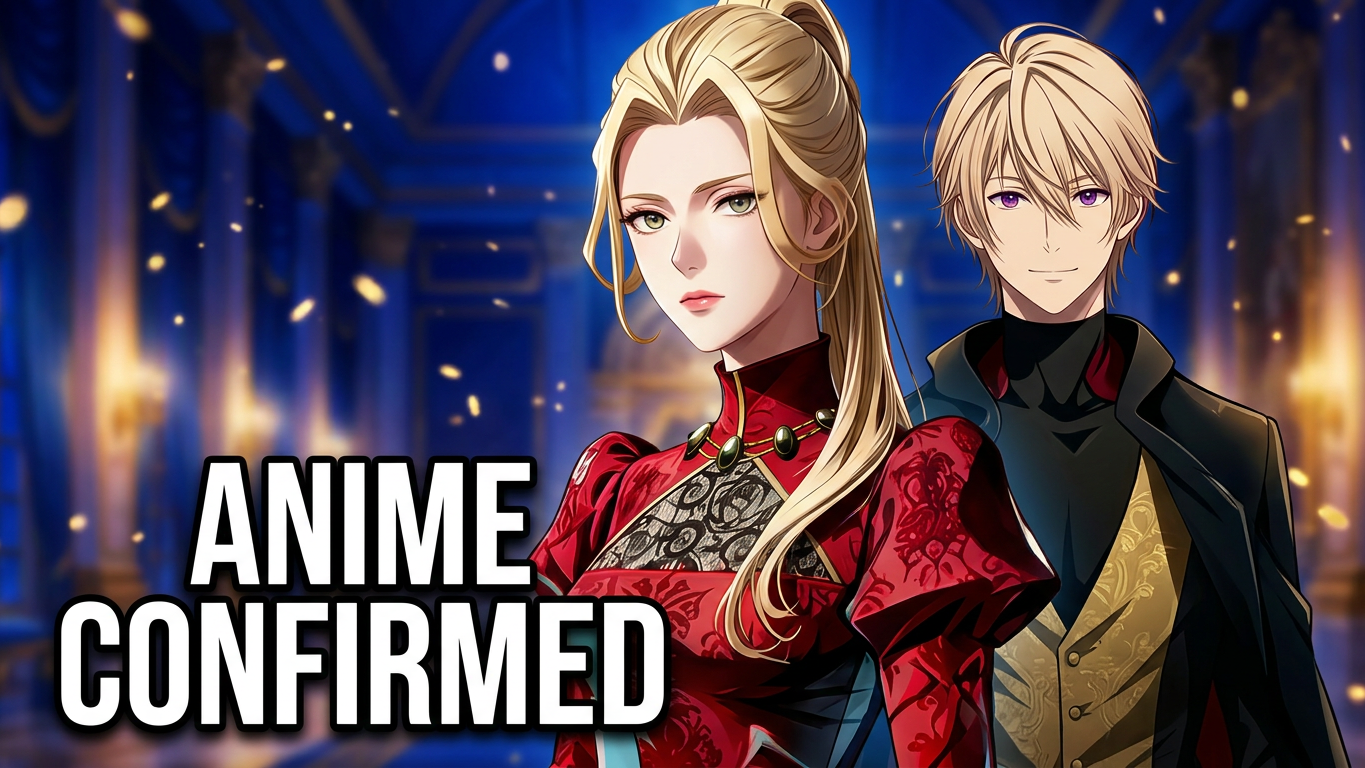
The Remarried Empress is getting an anime and Navier’s story is far from over
At New York Comic Con on 9 October 2026, Crunchyroll officially announced that the popular Korean fantasy romance is receiving an anime adaptation, scheduled to premiere in 2027.
And this isn’t simply another announcement about the upcoming Korean live-action drama. It’s a completely separate adaptation, bringing Navier, Heinrey, Sovieshu and Rashta into the world of Japanese animation.
For a story that began as a Korean web novel, developed a devoted international following through its webtoon and is now expanding across television and anime, The Remarried Empress is becoming a fascinating example of how Asian fantasy stories are finding audiences worldwide.
What is The Remarried Empress about?
At the centre of the story is Navier Ellie Trovi, the intelligent, composed and politically accomplished empress of the Eastern Empire.
Navier has spent her life preparing to fulfil her responsibilities as empress. Her marriage to Emperor Sovieshu may not be a fairy-tale romance, but she believes in the stability of their partnership and the importance of her position.
Everything changes when Sovieshu becomes romantically involved with Rashta, a young woman whose arrival at court creates a scandal.
As Sovieshu’s relationship with Rashta develops, Navier finds herself increasingly humiliated and politically isolated. The emperor’s decisions threaten not only their marriage but also the position Navier has worked so hard to maintain.
Then comes the moment that helped make the series famous.
When Sovieshu seeks a divorce, Navier makes an extraordinary request: she wants permission to remarry.
Her chosen husband? Heinrey, the charming and mysterious prince of the Western Kingdom.
What follows is a story of royal intrigue, political manoeuvring, betrayal, complicated relationships and a woman refusing to let the end of her marriage become the end of her story.
Why Navier is such a compelling heroine
One of the most interesting aspects of The Remarried Empress is that Navier doesn’t follow the familiar fantasy-romance formula of an overlooked heroine suddenly discovering her worth.
She already knows her worth.
Navier is capable, educated and politically experienced. Her challenge is navigating a system in which her authority and personal happiness are tied to the decisions of an increasingly unreliable husband.
Her response to betrayal is not simply to seek revenge. She begins rebuilding her future.
That doesn’t mean Navier is without flaws, or that every decision she makes is emotionally detached. Much of the appeal comes from watching the conflict between her carefully maintained public image and the feelings she rarely allows herself to express.
Heinrey brings a different energy to the story. His playful charm conceals a calculating political mind, making him much more than a convenient romantic replacement.
And then there are Sovieshu and Rashta, whose decisions have inspired endless arguments among readers.
The series gives fans plenty of reasons to debate loyalty, ambition, privilege and responsibility.
What do we know about the anime?
The 2027 adaptation will be directed by Tetsuya Yanagisawa at animation studio TROYCA.
Akiko Inoue is responsible for the series composition and screenplay, Jun Nakai is designing the characters and Yuki Fukasawa will compose the music.
Crunchyroll has also confirmed the principal Japanese voice cast.
Yoko Hikasa will voice Navier, Ryohei Kimura will play Heinrey, Tomoaki Maeno will portray Sovieshu and Reina Ueda will voice Rashta.
An announcement trailer and character visuals have already been revealed.
Although the series has a confirmed 2027 release window, an exact premiere date and episode count have not been announced.
How does this differ from the Korean drama?
The important distinction is that the anime and live-action K-drama are separate productions adapting the same underlying story.
Animation offers possibilities that live action approaches differently, particularly when dealing with elaborate imperial settings, fantasy transformations, dramatic visual symbolism and the more extravagant elements of the original webtoon.
The Korean drama, meanwhile, has the opportunity to bring the characters’ relationships and political conflicts to life through performances, costumes and physical sets.
Neither format is automatically better.
For webtoon readers, the biggest question may be which adaptation manages to preserve the original characters’ personalities and the intricate relationships that make the story so addictive.
Why this story keeps finding new audiences
The Remarried Empress originated as a web novel by Alphatart, published between 2018 and 2020. Its manhwa adaptation began in 2019, with English-language print editions published by Yen Press.
Its continued expansion reflects the growing international reach of Korean web novels and webtoons.
But its success is also rooted in something simpler: audiences love watching a capable character regain control of a life that someone else has tried to destroy.
Navier’s story combines romantic escapism with political conflict and a deeply satisfying premise.
The anime could introduce that story to an entirely new audience, including viewers who may never have read a Korean webtoon or watched a historical fantasy K-drama.
And for existing fans, it means another opportunity to revisit one of fantasy romance’s most memorable royal divorces.
The question now is whether animation or live action will deliver the definitive version of Navier’s story.
Which adaptation are you most excited about: the anime or the K-drama?
Share this article
