
Netflix’s next big K-drama? Song Hye-kyo and Gong Yoo’s Tantara finally gets a release date
Two of South Korea’s most recognisable actors are joining forces for a new Netflix drama, and audiences finally have a confirmed date to look forward to. Tantara, starring Song Hye-kyo and Gong Yoo, will premiere worldwide on 11 December 2026, bringing viewers into the competitive and often unforgiving world of South Korea’s entertainment industry during the 1960s, 1970s and 1980s.
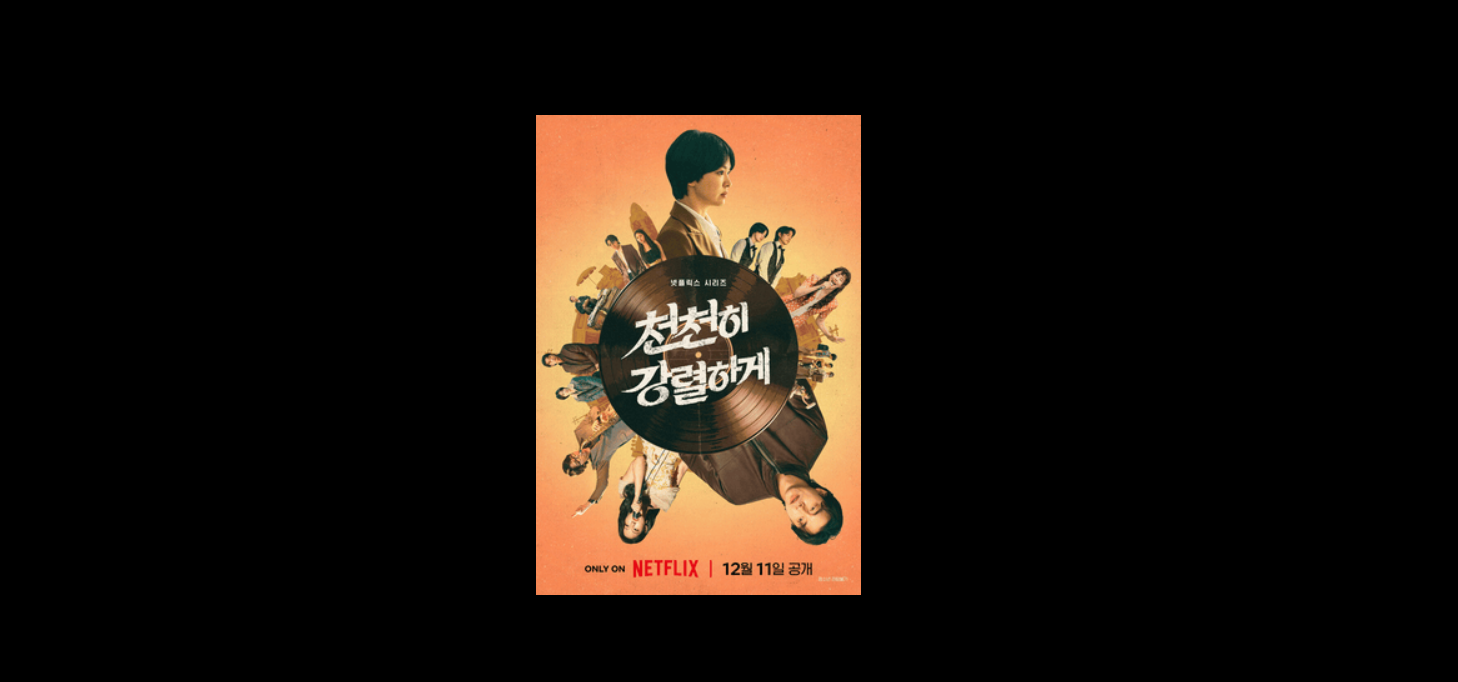
Netflix confirmed the release date on 22 October, alongside a new promotional poster introducing the characters and their journey through an industry where talent, ambition and determination do not necessarily guarantee success.
The production brings together screenwriter Noh Hee-kyung, whose credits include Our Blues and It’s Okay, That’s Love, and director Lee Yoon-jung, known for Coffee Prince. Alongside Song Hye-kyo and Gong Yoo, the cast includes Kim Seol-hyun, Cha Seung-won, Lee Ha-nee and Na Moon-hee.
While the combination of major stars is enough to attract considerable attention, Tantara has something else that makes it especially interesting. Rather than exploring the polished world of modern K-pop, the series is set during an earlier era when South Korea’s recording and entertainment industries were developing under very different social and political circumstances.
What is Tantara about?
At the centre of the story is Min-ja, played by Song Hye-kyo, a woman who has spent much of her life struggling to escape poverty. Having taken on whatever work she could find to survive, she eventually becomes involved in the recording industry, determined to create a future very different from the one she inherited.
Gong Yoo plays Dong-gu, Min-ja’s childhood friend and the person who continues supporting her ambitions as they enter the entertainment business together. Netflix’s official description establishes their longstanding connection and shared determination, although it has not confirmed precisely how their personal relationship will develop throughout the series.
The two begin near the bottom of the entertainment industry, working in nightclubs and taking on various jobs before gradually entering talent management.
Their journey brings them into contact with Min-hui, portrayed by Kim Seol-hyun, a confident young singer whose powerful voice and determination make her their first artist. She is not simply someone waiting to be discovered, but a performer with her own ambitions and complicated relationship with Min-ja.
Cha Seung-won portrays Seok Gil-yeo, an influential hitmaker whose ability to transform inexperienced singers into stars gives him considerable power within the music business.
Together, these characters inhabit an environment where personal relationships and professional opportunities are closely intertwined. The central struggle is not merely becoming famous, but surviving the sacrifices required to pursue success in an industry that can be as unforgiving as it is glamorous.
Song Hye-kyo returns with another demanding role
Song Hye-kyo has spent decades building a career across romantic dramas, melodramas and more psychologically intense productions. International audiences remember her from Autumn in My Heart, Full House, Descendants of the Sun and Encounter, while her performance in Netflix’s The Glory demonstrated another side of her acting abilities.
In The Glory, she portrayed Moon Dong-eun, a woman whose experiences of school violence shape an elaborate plan for revenge. The role required considerable restraint, with the character’s emotional pain frequently communicated through carefully controlled expressions rather than dramatic confrontation.
Min-ja in Tantara faces a different kind of struggle, but her circumstances also appear to demand determination and emotional resilience. She is a woman who has experienced poverty and must find a way to establish herself within a highly competitive professional environment.
What makes the character potentially compelling is that her ambition is rooted in circumstances rather than simple personal vanity. For Min-ja, success represents the possibility of escaping a difficult past and creating greater control over her future.
Song Hye-kyo’s ability to portray characters whose public confidence conceals more complicated emotions could be particularly effective in a story about ambition, sacrifice and the personal costs of success.
Gong Yoo and the return of a familiar creative partnership
For Gong Yoo, Tantara also represents an interesting addition to a varied career. He remains widely recognised for Coffee Prince, Guardian: The Lonely and Great God and the film Train to Busan, while international Netflix viewers know him from his appearances in Squid Game and his leading role in The Silent Sea.
His involvement also reunites him with director Lee Yoon-jung, who directed Coffee Prince in 2007.
That earlier series became an important Korean romantic drama, particularly because of its characters, emotional relationships and exploration of identity. It remains a favourite among viewers who discovered K-dramas before their current worldwide popularity.
However, Tantara should not be regarded as another version of Coffee Prince. Its historical setting and entertainment-industry premise offer a different kind of storytelling environment.
Dong-gu’s longstanding friendship with Min-ja could become one of the show’s most important emotional foundations, especially as the two navigate the difficult transition from struggling workers to people responsible for building the careers of others.
Whether that relationship becomes romantic, remains primarily a friendship or develops in another direction has not been established through the official synopsis.
What makes the supporting characters important?
Although the main promotional attention naturally falls on Song Hye-kyo and Gong Yoo, the other characters appear central to the story.
Kim Seol-hyun’s Min-hui represents the performing talent on which the entertainment business depends. Her determination to succeed and her complicated relationship with Min-ja suggest that professional ambition may create both opportunities for collaboration and personal conflict.
Cha Seung-won’s Seok Gil-yeo occupies a different position. As an established composer and hitmaker, he already possesses the influence that younger artists and managers are attempting to achieve.
His role could provide an opportunity to examine the relationship between creative talent and the people who control access to the music industry.
The wider cast also includes Lee Ha-nee as Yang-ja and Na Moon-hee as Mal-soon, characters featured in Netflix’s new promotional material.
Their full roles have not yet been explained in detail, but their inclusion suggests a story extending beyond the immediate relationship between Min-ja and Dong-gu.
Before modern K-pop: why the historical setting matters
For audiences familiar with contemporary K-pop, it can be easy to imagine South Korea’s entertainment industry entirely through the lens of global idol groups, streaming platforms and international concert tours.
But the foundations of Korean popular music developed long before the modern idol industry emerged.
During the 1960s, South Korea’s recording and broadcasting industries were undergoing significant changes. Vinyl records, radio and increasingly accessible television helped popular music reach wider audiences, while live entertainment venues provided important opportunities for performers.
Trot remained a major musical tradition, while Western-influenced popular music, rock and folk gradually became more prominent.
By the 1970s, younger audiences were developing their own musical preferences, and acoustic folk music and rock gained increased attention. However, artistic expression also existed within a restrictive political environment, with government censorship affecting songs and performers.
The 1980s brought further changes, including the growing popularity of ballads, dance music and a more diverse commercial music industry.
This history provides a fascinating background for Tantara, particularly because the series spans several decades during which entertainment, technology and Korean society were changing substantially.
These are documented historical developments rather than confirmed plot points. Netflix has not established that the drama will portray particular censorship cases, historical musicians or real-world recording companies.
Nevertheless, understanding the period helps explain why the setting offers such rich possibilities for storytelling.
The creative team behind Tantara
Screenwriter Noh Hee-kyung is known for character-driven dramas that explore relationships, hardship and the emotional complexities of ordinary lives.
Our Blues, released in 2022, followed an interconnected group of characters on Jeju Island, examining family relationships, financial struggles, friendship and the difficult circumstances that shape people’s choices.
Her earlier work includes It’s Okay, That’s Love, Dear My Friends and That Winter, the Wind Blows.
Rather than depending exclusively on sensational plot twists, her dramas frequently draw their emotional power from the relationships between characters and the consequences of decisions made over time.
That approach could be particularly effective in a historical entertainment-industry story. Success and failure in music are rarely determined by talent alone, and the relationships between performers, managers and industry executives can be as complicated as those found in more conventional family dramas.
Director Lee Yoon-jung also has experience bringing character-focused stories to television, making the collaboration one of the more interesting aspects of this production.
What does the new Netflix poster reveal?
Netflix’s release-date poster places a turntable at the centre of its design, with images of the characters arranged around it to suggest the passage of time.
The artwork depicts Min-ja and Dong-gu during different stages of their lives, including their early struggles and their eventual involvement in managing performers.
Other sections introduce Min-hui as a singer and Seok Gil-yeo as a musician, reinforcing the importance of music to the story.
The poster suggests an expansive narrative following the characters over several years, but it does not establish the exact events or final direction of their relationships.
For now, it offers an atmospheric introduction to a story about people attempting to build extraordinary lives from difficult beginnings.
When and where can you watch Tantara?
Netflix has confirmed that Tantara premieres worldwide on Friday, 11 December 2026.
The series is a Netflix original production, and the official announcement identifies the date as a global release.
The number of episodes, exact international language options and other regional viewing details should be confirmed through Netflix’s programme listing as the premiere approaches.
Could Tantara become one of Netflix’s biggest K-dramas?
The combination of Song Hye-kyo, Gong Yoo, an experienced creative team and a distinctive period setting certainly makes Tantara one of December’s more interesting Korean productions.
However, there is an important distinction between a highly anticipated series and a successful one.
The cast and creative team provide reasons to be interested, but they cannot guarantee positive audience reception or strong viewing figures.
What makes the premise appealing is the possibility of exploring a period of Korean entertainment history that many international viewers know relatively little about.
Modern K-pop has introduced global audiences to Korean music on an extraordinary scale. Tantara offers the opportunity to explore an earlier world, where careers were built through recording studios, live performances and the determination of people trying to find a place in a difficult industry.
For fans of historical K-dramas, music-related storytelling and character-driven drama, this is certainly one to add to the December watchlist.
Are you most interested in Tantara because of Song Hye-kyo and Gong Yoo, the history of Korean popular music or the story of people trying to make it in show business?
Share this article
