
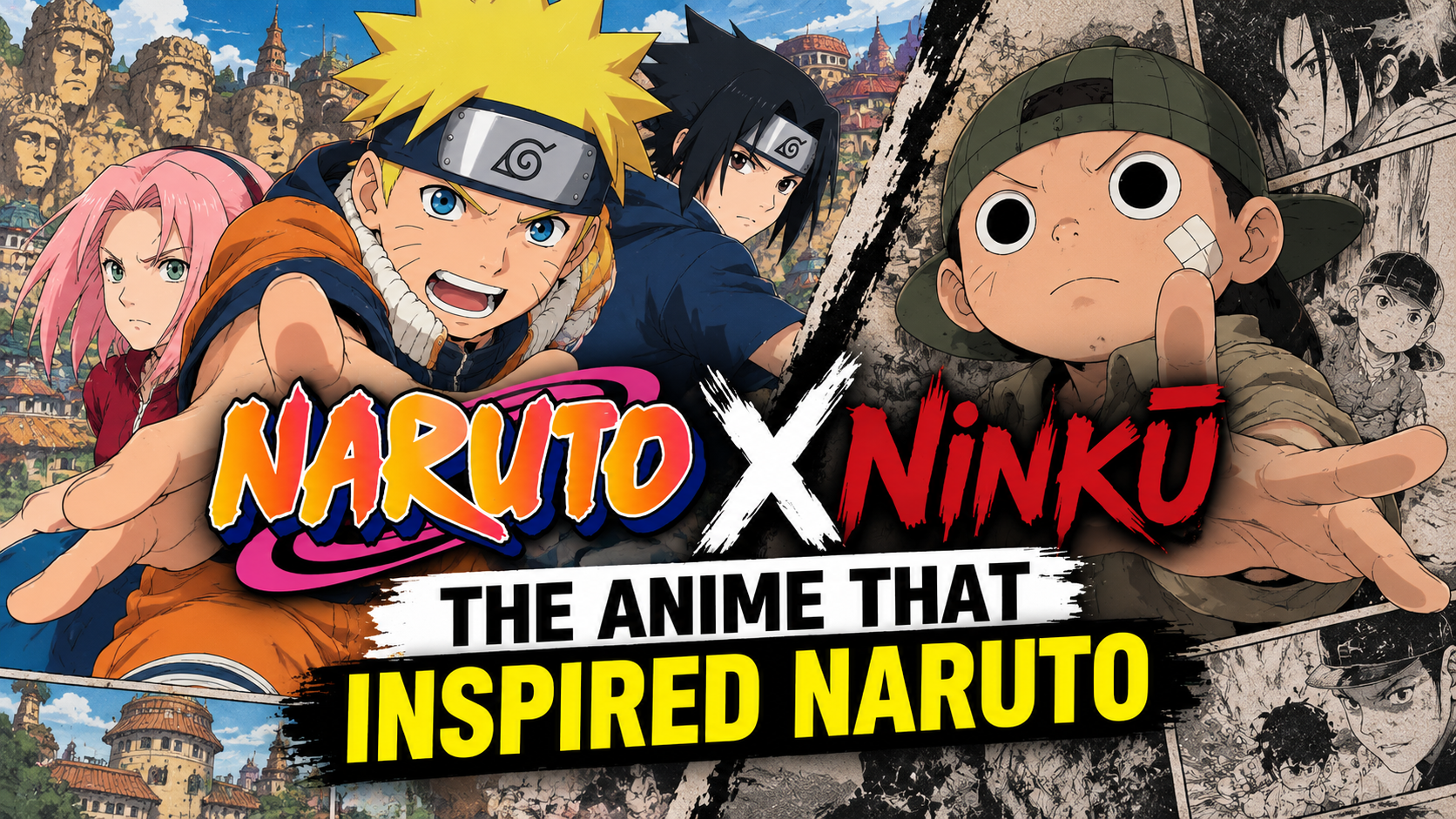
Naruto meets the anime that inspired it – the surprising story behind the new Ninkū crossover
For more than two decades, Naruto has been one of the defining franchises of modern anime. From Naruto Uzumaki’s early days as an outcast in the Hidden Leaf Village to the extraordinary battles and emotional farewells of Naruto Shippuden, the series has influenced generations of fans and helped introduce Japanese animation to audiences around the world. Now, a newly announced project is taking the franchise back to one of its most important creative influences.
At New York Comic Con on 10 October 2026, VIZ Media announced Naruto x Ninkū, a four-episode anime crossover bringing together Naruto, Sasuke and Sakura with characters from Ninkū, the 1990s manga and anime that helped inspire Naruto creator Masashi Kishimoto. The announcement is particularly meaningful because both manga creators are involved in supervising the project, transforming a long-standing creative connection into an actual animated adventure.
For fans who grew up watching the original Team 7, the crossover offers an opportunity to revisit a familiar period in the franchise. For those who have never encountered Ninkū, it also provides an introduction to a fascinating piece of anime history.
What is Ninkū, and how did it influence Naruto?
Before Naruto Uzumaki became one of anime’s most recognisable characters, manga creator Koji Kiriyama introduced readers to the unusual world of Ninkū. The manga began publication in Weekly Shōnen Jump in 1993 and received a television anime adaptation in 1995, several years before Kishimoto’s Naruto began its own manga run in 1999.
Ninkū follows Fūsuke, a young ninja whose extraordinary fighting abilities contrast with his unconventional appearance and seemingly carefree personality. He practises Ninkū, a fictional martial art combining ninja techniques with powerful combat abilities, and travels through a dangerous world shaped by military conflict and the legacy of an elite group of warriors.
Although the two series tell different stories, viewers familiar with Naruto may recognise certain creative similarities. Both feature unusual young protagonists whose abilities are frequently underestimated, inventive fighting techniques and a balance between humour and serious action. These similarities are particularly interesting because Kishimoto has acknowledged Ninkū as one of the works that influenced his approach to creating manga.
In his message accompanying the crossover announcement, Kishimoto explained that his desire to see more of Ninkū helped motivate him to create Naruto. He also described Fūsuke as a kind of secret mentor to Naruto, making the collaboration more than a simple promotional exercise. It brings together a character who inspired a creative journey and the enormously successful character who eventually emerged from it.
What is Naruto x Ninkū about?
According to the official synopsis, the four-episode crossover begins with a mission assigned to Naruto, Sasuke and Sakura by their teacher, Kakashi. When Kakashi is unable to accompany them, Naruto is temporarily placed in charge of Team 7, an arrangement that should immediately amuse anyone familiar with the original series.
Eager to demonstrate his leadership abilities, Naruto takes his responsibilities seriously, but the mission soon goes wrong when the three young ninja become lost in another world. There they encounter Fūsuke, creating the circumstances for an adventure that brings the two franchises together. Although the announcement confirms the meeting between these characters, the full storyline and the nature of the threat facing them have not yet been disclosed.
One of the most appealing aspects of the project is its use of the younger Team 7. The complicated relationships between Naruto, Sasuke and Sakura eventually became central to some of the franchise’s most dramatic storylines, but their early adventures had a different atmosphere. There was more room for humour, rivalry, teamwork and the unpredictable decisions of three inexperienced ninja learning to work together.
Revisiting that period could capture some of the charm that originally made Naruto so enjoyable, while introducing a character whose influence reaches back to the franchise’s beginnings.
The original creators are involved
The involvement of Masashi Kishimoto and Koji Kiriyama is one of the most significant details of the announcement. Both creators are supervising the crossover, while the production also includes individuals with existing connections to the two franchises.
Noriyuki Abe, who directed the original Ninkū television anime and later worked on Boruto: Naruto Next Generations, is involved in the project. Tetsuya Nishio, whose animation and character-design work connects him to both series, is also participating. The original Japanese voices add another connection to the earlier productions, with Junko Takeuchi returning as Naruto and Rica Matsumoto reprising Fūsuke.
VIZ revealed a teaser trailer, a collaboration illustration and early animation drawings during its New York Comic Con presentation. These materials provide an initial glimpse of the production, although its eventual reception and how effectively the characters will work together remain to be seen.
Project Rasengan reveals a bigger future for Naruto
The crossover was only one part of a much broader announcement. VIZ also introduced Project Rasengan, a multiyear global initiative intended to expand the Naruto and Boruto franchises through anime, manga, games, events and other projects.
One confirmed development is a new Naruto Card Game, scheduled for a worldwide launch in June 2027. Players will be able to choose a leader and assemble teams of ninja, using strategies inspired by the characters and techniques of the franchise. The initial starter decks will feature Naruto, Sasuke and Gaara, while the first booster set is titled Enter: Naruto Uzumaki!
For fans of collectible trading card games such as Pokémon and Yu-Gi-Oh!, this represents another opportunity to experience a familiar anime universe through competitive gameplay and collecting. Bandai has also outlined plans for demonstrations and promotional activities ahead of the official launch.
Perhaps the most intriguing announcement, however, was a teaser suggesting new Naruto manga from Masashi Kishimoto. Details remain limited, and the publisher has not confirmed the storyline, release date or format. It would therefore be premature to describe the project as a continuation of the original manga or a sequel to any particular storyline.
Further Project Rasengan announcements are expected around Jump Festa in December 2026, making the next few months particularly interesting for fans following the franchise’s future.
Why this crossover matters
Anime crossovers are not unusual, particularly when popular franchises celebrate anniversaries or promote new projects. However, Naruto x Ninkū has a creative connection that distinguishes it from many similar productions. It allows one of anime’s most successful modern ninja characters to encounter a predecessor who helped shape his creation.
For younger viewers, the project could introduce Ninkū to an audience that may never have explored 1990s anime. Older fans may enjoy revisiting a series that belongs to an important era of Japanese animation, while long-time Naruto viewers will have another chance to spend time with the original Team 7.
The crossover also offers a reminder that influential franchises rarely emerge in isolation. Artists draw inspiration from the stories they encounter, combining familiar ideas with their own characters, experiences and imagination to create something new.
With a four-episode crossover, a new trading card game and further manga developments on the horizon, Naruto clearly has more stories to tell. Whether every new project will appeal to existing fans remains an open question, but returning to the creative influences behind the original series is an interesting place to begin.
Would you prefer more adventures featuring the original Team 7, new crossovers with classic anime or a continuation of Naruto’s main storyline?
Share this article
