
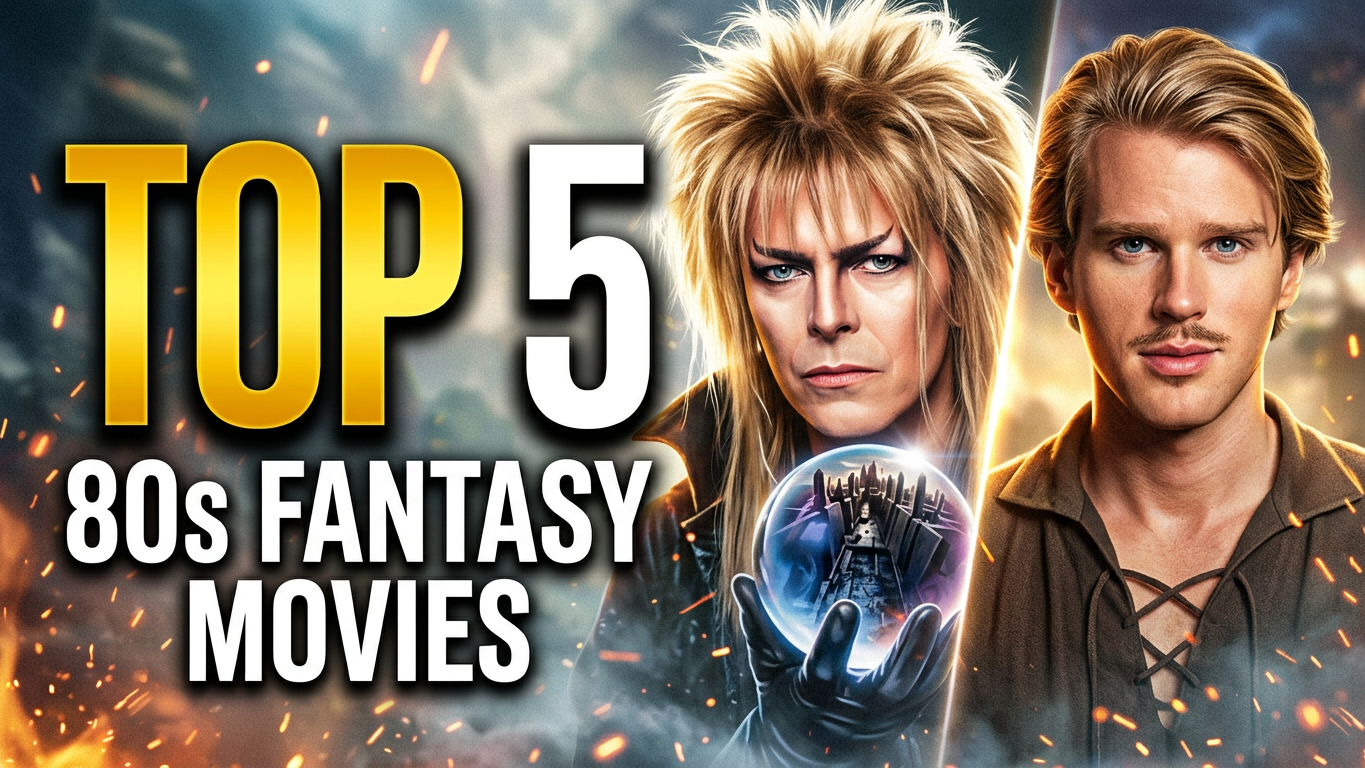
Battle of the 80s Fantasy Movies: Ranking the Cult Classics That Still Rule the Kingdom
The 1980s gave us a version of fantasy cinema that feels almost impossible to imagine in today’s film landscape. Before cinematic universes, endless sequels and carefully calculated franchise-building, fantasy films were allowed to be strange, ambitious and wildly imaginative. Studios took risks on stories filled with goblins, ancient prophecies, dark magic and impossible worlds, trusting audiences to follow them into the unknown.
Not all of them were massive hits when they first arrived, but time has been kind to the best of them. Many of these films have outlived their original box office runs and become something far more powerful: cult classics that continue to shape fantasy storytelling and inspire generations of fans.
But among the giants of the decade, one question still sparks debate: which 80s fantasy film truly deserves the crown?
To make the argument a little more interesting, we ranked five of the era’s most beloved fantasy heavyweights: Labyrinth, The Princess Bride, The NeverEnding Story, Legend and Willow. This ranking weighs everything that matters most in fantasy cinema — storytelling, world-building, unforgettable villains, cultural legacy and the one test no classic can escape: whether it still holds up when you watch it today.
5. Legend (1985): The Most Beautiful Darkness
At number five is Legend, which in many ways feels like the most visually mesmerising film on this list. Directed by Ridley Scott, Legend is less concerned with conventional storytelling and more focused on creating an atmosphere that feels like stepping into a dark fairy tale painting. Every scene is drenched in texture, shadow and fantasy imagery that still looks remarkable decades later. The film’s greatest weapon, though, is Darkness, brought to life by Tim Curry in one of the most unforgettable villain performances in fantasy history. His towering horns, thunderous voice and theatrical menace turned Darkness into an icon, even for people who have only seen clips of the film. Yet as powerful as its imagery remains, Legend sits at number five because its narrative never feels as emotionally or structurally satisfying as the films ranked above it. It is a masterpiece of visual fantasy, but not quite the strongest complete experience.
4. Willow (1988): The Underrated Epic
At number four is Willow, a film that has arguably aged better than many expected. Created from a story by George Lucas and directed by Ron Howard, Willow offers one of the richest fantasy worlds of the decade. Unlike the dreamlike unpredictability of Labyrinth or the symbolic emotional world of The NeverEnding Story, Willow feels grounded in a living, breathing universe. Its kingdoms, political tensions, magical systems and ancient prophecies give it a scale that feels far larger than the immediate story on screen. It is easy to imagine dozens of untold stories existing within its world. The performances, particularly by Warwick Davis and Val Kilmer, add charm and humanity to what could have been a standard fantasy quest. The reason Willow lands at fourth is not because it lacks quality, but because it lacks the cultural dominance and iconic scenes that helped elevate the films above it into mythic territory.
3. The NeverEnding Story (1984): The Emotional Giant
Number three belongs to The NeverEnding Story, a film that remains one of the most emotionally resonant fantasy experiences ever made. What separates it from many fantasy adventures is its understanding that fantasy is not simply about escapism — it is about confronting fear, grief and hope through imagination. The world of Fantasia feels endless and alive, filled with creatures, mysteries and dangers that feel both magical and deeply symbolic. The film’s central threat, the Nothing, remains one of the most fascinating villains in fantasy because it is not a creature to fight but an idea — emptiness itself, consuming imagination and meaning. That concept gives the story a philosophical depth that still resonates today. Then there is Falkor, one of fantasy cinema’s most beloved creatures, and of course the film’s most emotionally devastating moments, which still live vividly in the memories of those who watched it as children. Its power lies in how deeply it connects emotionally, making it far more than just another adventure story.
2. Labyrinth (1986): The Cult King
At number two is Labyrinth, perhaps the ultimate cult fantasy film of the 1980s. Directed by Jim Henson, Labyrinth is unlike anything else on this list because it embraces chaos as part of its identity. Its world feels unpredictable, shifting and alive, like a dream that keeps changing shape while you are inside it. The practical creature work remains extraordinary, filled with personality and imagination in ways that modern fantasy often struggles to replicate. But the true centre of the film is Jareth, the Goblin King, played by David Bowie. Bowie’s performance transformed the character into one of fantasy’s most iconic figures, blending charm, danger and mystery in a way that made him impossible to forget. Over time, Labyrinth’s cultural footprint has only grown, with fan communities, conventions, art and endless tribute content keeping it alive. It is a film that has become bigger than its original release. The reason it stops at number two is simple: for all its imagination and atmosphere, its story structure is looser and less disciplined than the film taking the top spot.
1. The Princess Bride (1987): The True Champion
That brings us to number one: The Princess Bride.
What makes The Princess Bride extraordinary is not that it dominates one specific category, but that it succeeds in all of them. It is funny, adventurous, romantic, emotional and endlessly quotable, all while maintaining a pace and structure that feel almost flawless. Unlike many fantasy films that lean heavily into spectacle or mythology, The Princess Bride builds its strength through character and writing. Every major character is memorable, every scene serves a purpose and every line feels sharp enough to survive decades of repeated viewing. It manages to parody fairy tale conventions while simultaneously becoming one of the greatest fairy tales ever filmed, which is an almost impossible balance to achieve. Whether it is revenge, romance, sword fighting or humour, the film handles each element with confidence and precision.
That balance is why it takes the crown.
The truth is that ranking fantasy films will always be subjective because fantasy itself is personal. For some viewers, Labyrinth will always be the definitive fantasy experience because of how strange and immersive it feels. For others, The NeverEnding Story carries too much emotional weight to be beaten. Some will argue that Legend created the most beautiful fantasy world, while others will insist Willow deserves more credit for building a richer universe than most people remember.
But if the question is which film combines the strongest storytelling, the greatest rewatchability and the most complete fantasy experience, The Princess Bride still reigns supreme.
At least until someone starts arguing for Labyrinth in the comments — which, if we are honest, is almost guaranteed.
Share this article
