
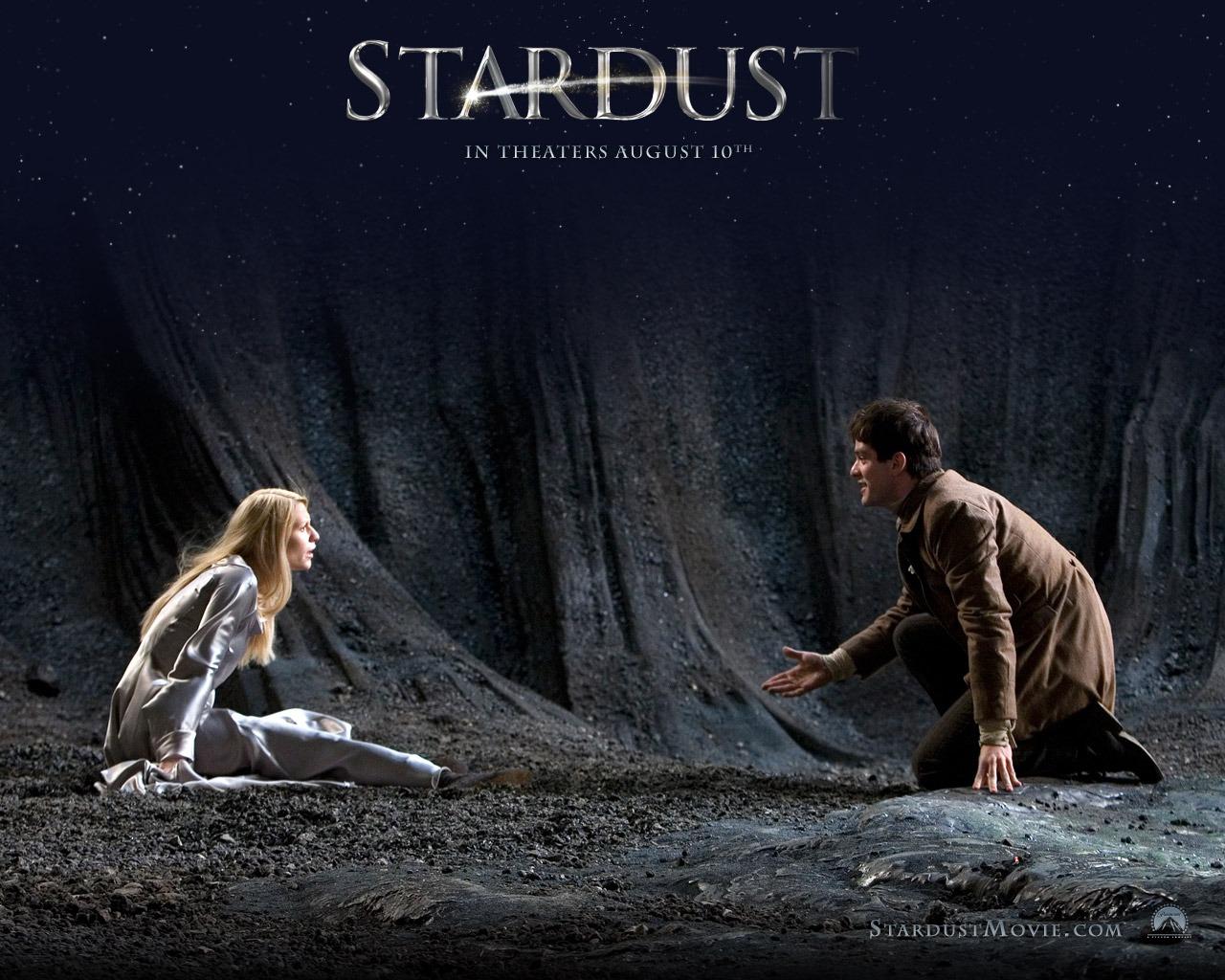
Stardust: How an overlooked fantasy adventure became a modern cult classic
In 2007, a fantasy adventure arrived in cinemas with an extraordinary cast, a bestselling Neil Gaiman story behind it, flying pirate ships, murderous princes, ancient witches, romance, comedy and a fallen star who turned out to be a woman. On paper, Stardust had virtually everything necessary to become a major fantasy hit, yet its theatrical performance was relatively modest and it never became the enormous franchise that its filmmakers might have imagined.
Nearly twenty years later, that hardly seems to matter.
Stardust has gradually become one of the most affectionately remembered fantasy films of the 2000s, finding the kind of audience over time that it did not necessarily reach during its original theatrical run. Directed by Matthew Vaughn and adapted from Neil Gaiman’s story, it occupies an unusual space between romantic comedy, traditional fairy tale, swashbuckling adventure and slightly darker fantasy. It is funny without constantly mocking its own genre, romantic without becoming overly sentimental and filled with enough witches, ghosts, magic and murder to ensure that the fairy tale never becomes too sweet.
It also boasts a cast that looks even more extraordinary in retrospect. Claire Danes, Charlie Cox, Michelle Pfeiffer, Robert De Niro, Mark Strong, Sienna Miller, Rupert Everett, Peter O’Toole, Ricky Gervais and a young Henry Cavill all appear, while Ian McKellen provides the narration.
Somehow, Stardust managed to assemble all of that into one film.
From Neil Gaiman’s fairy tale to the big screen
The origins of Stardust are slightly more interesting than simply saying that it was based on Neil Gaiman’s 1999 novel. The story actually began as an illustrated work created by Gaiman and artist Charles Vess before subsequently appearing in novel form. Its world drew on traditional British fairy tales while allowing Gaiman to play with many of their familiar conventions.
At the centre of the story is Wall, an ordinary English village named after the enormous stone barrier separating it from a magical kingdom. There is only one opening through the wall, and it is guarded constantly to prevent the inhabitants of the village from crossing into the strange world on the other side.
Matthew Vaughn, who had made his directorial debut with Layer Cake, took on the film adaptation and co-wrote the screenplay with Jane Goldman. Their version retained the central ideas and characters of Gaiman’s story while changing parts of the plot and expanding other elements for the screen.
The result has often been compared with The Princess Bride, and the comparison makes sense. Both understand the language of traditional fairy tales while also being playful enough to twist it. Stardust, however, has a personality of its own, particularly in the way it combines romance, adventure and surprisingly dark humour.
People die frequently in this fairy tale, and several of them continue hanging around afterwards.
Tristan begins his adventure for completely the wrong woman
The story begins with Tristan Thorn, played by Charlie Cox, living in Wall and hopelessly infatuated with Victoria Forester, played by Sienna Miller. Tristan is awkward, inexperienced and convinced that winning Victoria’s affection will somehow transform his life.
Victoria, unfortunately, is considerably more interested in herself than she is in Tristan.
When the two see a star falling beyond the wall, Tristan makes an extravagant promise that he will retrieve it for her. He believes that bringing Victoria a fallen star will finally prove his devotion, so he ventures beyond the boundary that has separated his ordinary life from the magical world of Stormhold.
There is one fairly significant problem with his plan.
The star is not a rock.
She is a woman.
Her name is Yvaine, and she is played by Claire Danes.
Tristan’s initial response to this discovery is not exactly heroic. Determined to honour his promise to Victoria, he plans to bring Yvaine back to Wall and even uses a magical chain to prevent her from leaving him. It is deliberately uncomfortable because Tristan has not yet become the hero of the story. His understanding of love is still based on possession, grand gestures and the belief that obtaining something extraordinary will make someone else love him.
His journey through Stormhold gradually dismantles almost everything he thinks he knows.
Unfortunately, everyone else wants the star too
Tristan is not the only person searching for Yvaine, which turns what initially appears to be a simple romantic quest into something considerably more dangerous.
Three ancient witches have learned that consuming the heart of a fallen star can restore their youth. Their leader, Lamia, played by Michelle Pfeiffer, sets out to capture Yvaine and reclaim the beauty and power she once possessed.
At the same time, the royal family of Stormhold is experiencing a succession crisis.
The ageing king, played with magnificent cantankerousness by Peter O’Toole, has decided that his surviving sons should determine which of them deserves his throne. Instead of choosing an heir in a conventional fashion, he creates a magical challenge involving a royal necklace.
His sons respond exactly as one might expect from a family in which fratricide appears to be regarded as a perfectly reasonable career strategy.
The princes murder one another while pursuing the necklace, and the dead brothers then remain in the story as ghosts, watching the surviving members of their family continue eliminating each other. It is one of the film’s best recurring jokes and an excellent example of the way Stardust allows genuine darkness and comedy to occupy the same world.
Among the surviving princes is Septimus, played by Mark Strong, who proves that Lamia is not the only person Tristan and Yvaine need to worry about.
Michelle Pfeiffer makes Lamia far more interesting than a standard evil witch
Fantasy stories are filled with witches seeking youth and beauty, but Michelle Pfeiffer gives Lamia far more personality than the familiar archetype might suggest.
She is elegant, manipulative, terrifying and occasionally very funny. Her obsession with restoring her youth initially appears to be simple vanity, but the film gradually makes the consequences of her magic physically visible. Every spell has a cost, and the more magic
Share this article
