
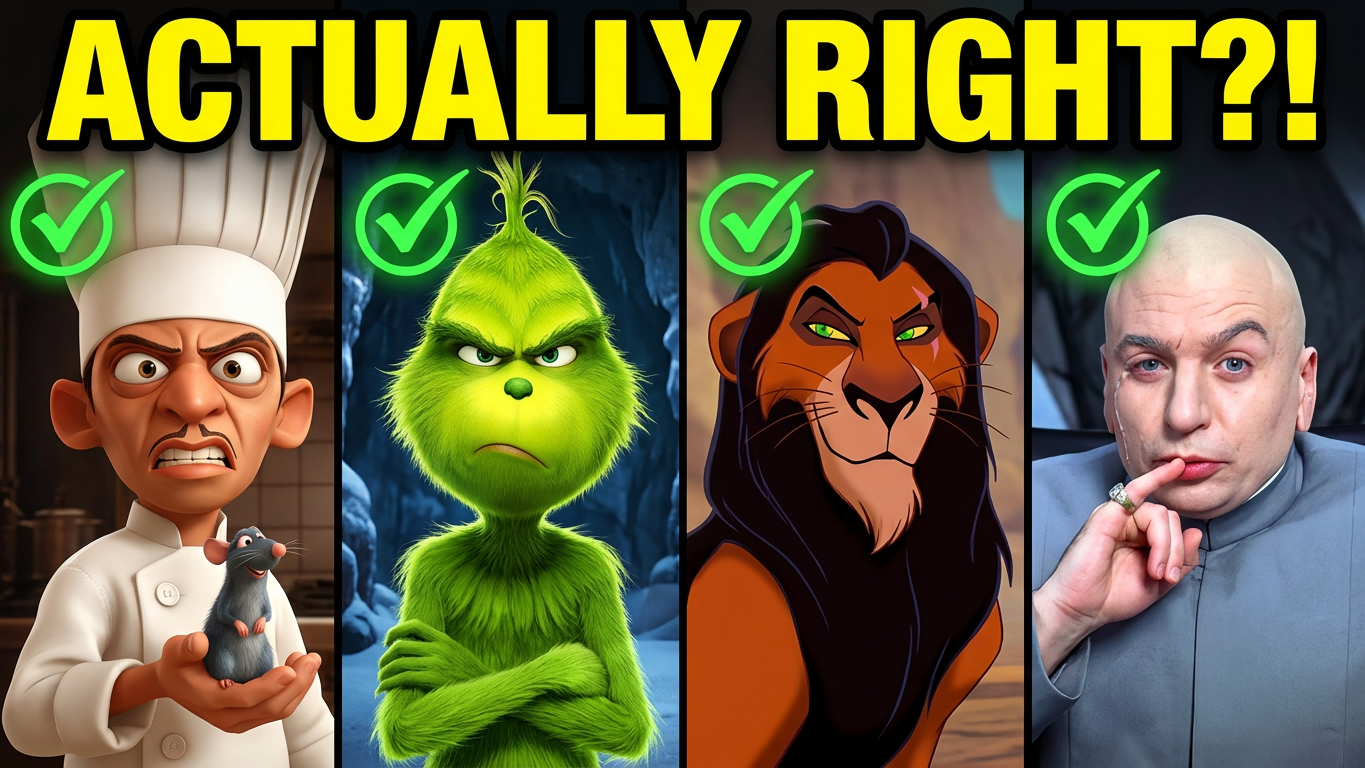
Movie Villains Who Actually Had a Point (They Were Just… Very Dramatic About It)
Villains in movies have a habit of ruining their own argument.
Not because their point is bad, but because somewhere between “I have a valid concern” and “here’s my plan,” they take a hard left into kidnapping, elaborate traps or trying to destroy civilisation.
That’s the tragedy of a good villain.
Sometimes, if they had just calmed down and spoken to someone — maybe over coffee, maybe in therapy — they could have resolved the whole thing in under an hour and saved everyone a lot of trouble.
But then we wouldn’t have a movie.
And if we are being honest, some movie villains were not entirely wrong. Their issue was often perfectly understandable. It was just their wildly dramatic response that turned them into the bad guy.
Here are some of the best examples.
Chef Skinner: The Only Person Concerned About Basic Hygiene
Poor Chef Skinner in Ratatouille never stood a chance.
The film wants us to root for the rat. And yes, the rat is charming, talented and somehow better at cooking than most humans. But let’s remove the Disney magic for one second and look at the facts.
There was a rat.
In the kitchen.
Controlling the chef.
That is not an inspiring underdog story. That is a health code nightmare.
Skinner spends the film trying to expose this madness while everyone acts like he’s being unreasonable. But imagine being the restaurant owner and finding out your signature dish was prepared by a rodent pulling hair strings like a culinary puppet master.
Skinner wasn’t paranoid. Skinner was the only adult in the room.
Scar: The Original Anti-Monarchy Activist
Scar from The Lion King absolutely crossed the line. Let’s not ignore the murder.
But before all that?
He raised a valid point.
The entire Pride Lands operates on hereditary monarchy. No interviews. No elections. No qualifications. Leadership just passes from father to son because… tradition.
Scar’s complaint was essentially, “So the cub gets the throne automatically?”
And honestly, that’s a fair question.
Was Scar power-hungry? Absolutely.
But his issue with the system itself? Not unreasonable.
He just chose to solve it in the most villainous way possible: murder, manipulation and hiring hyenas as management consultants.
Questionable strategy.
Captain Hook: Fighting for Peace Against an Immortal Child
Captain Hook, especially in Hook, has been unfairly framed for years.
Think about his situation.
He’s trapped in Neverland, endlessly hunted by a flying child who refuses to age, refuses responsibility and treats sword fights like after-school entertainment.
Peter Pan is essentially eternal chaos in green tights.
And Hook?
He just wants some order.
He wants structure.
He wants this child to stop appearing in his life uninvited.
Honestly, Hook feels less like a villain and more like someone trying to deal with a neighbour’s kid who keeps climbing over the fence.
Bruce: The Shark Who Was Actually Trying
Bruce from Finding Nemo deserves credit for one reason: self-improvement.
Bruce knew he had a problem.
Bruce addressed it.
Bruce joined a support group.
That is personal growth.
Most villains double down on their worst instincts. Bruce actively tried to change his behaviour.
Yes, things went badly when blood entered the water.
But relapse happens.
The important thing is he was trying.
That makes Bruce one of the most emotionally mature “villains” on this list.
Davy Jones: The Ultimate Break-Up Spiral
There are break-ups, and then there’s Davy Jones in Pirates of the Caribbean: Dead Man’s Chest.
This man got heartbroken and responded by literally removing his heart.
Physically.
That’s commitment to emotional avoidance.
His bitterness, rage and trust issues all stem from heartbreak, which makes him strangely relatable — just with more tentacles and fewer healthy coping mechanisms.
Most people deal with heartbreak by changing their hairstyle or posting vague song lyrics online.
Davy Jones built a cursed sea empire.
That is overcommitting to the bit.
Darth Vader: A Manager With Anger Issues
At his core, Darth Vader is not just about power.
He’s about order.
And looking at the rebellion in Star Wars: Episode VI – Return of the Jedi, you can see why.
Their plans are chaotic. Their meetings feel improvised. Their entire strategy often seems to depend on hope and luck.
Vader looked at that and thought, “This organisation needs structure.”
That’s management thinking.
Was his leadership style toxic?
Definitely.
If your boss force-chokes you for poor performance, HR should be involved.
But his desire for order in a chaotic galaxy? Understandable.
The Grinch: A Noise Complaint Taken Too Far
The older you get, the more you understand The Grinch.
As a child, you see Christmas magic.
As an adult, you hear what he heard.
Noise.
So much noise.
The Whos in How the Grinch Stole Christmas! are constantly singing, celebrating and generally operating at a volume that would violate several neighbourhood regulations.
The Grinch wasn’t anti-Christmas.
He was anti-being-awake-at-4am-because-his-neighbours-were-singing.
That’s a very modern problem.
Agent Smith: Burnt Out Beyond Repair
Agent Smith in The Matrix has the energy of someone who has been in the same office job for fifteen years and is one email away from quitting.
His speeches about humanity being chaotic, destructive and impossible to manage don’t feel like villain speeches.
They feel like workplace burnout.
Smith doesn’t hate humans because he’s evil.
He hates humans because he’s tired.
And honestly, we’ve all been there.
Dr. Evil: Just Wanted to Be Taken Seriously
Dr. Evil from Austin Powers: International Man of Mystery is less evil mastermind and more frustrated businessman.
Imagine building an empire, crafting complex plans and trying to establish your legacy, only for everyone around you to laugh at your ideas.
That would annoy anyone.
His famous ransom demand of “one million dollars” was not evil.
It was just financially outdated.
That’s not villainy.
That’s poor market awareness.
Final Thoughts: The Problem Was Never the Point
The funny thing about great villains is that they often start from a place we understand.
Wanting clean kitchens.
Questioning unfair leadership.
Wanting peace and quiet.
Trying to improve yourself.
Recovering from heartbreak.
Seeking order.
Wanting respect.
These are normal things.
Relatable things.
The problem is that movie villains never stop there.
They always add dramatic speeches, explosions and elaborate revenge plans.
And that’s why they become villains.
Not because they were wrong.
Because they were extra.
And honestly, cinema would be much less fun without that.
Share this article
