
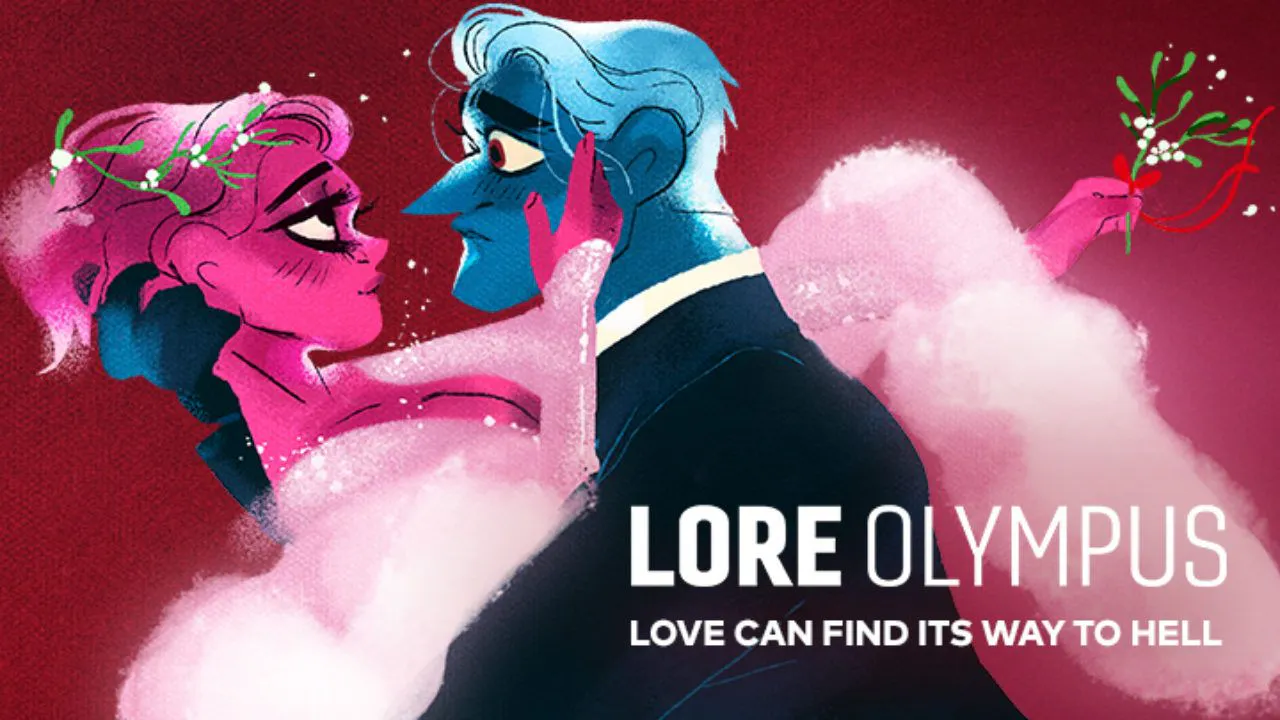
Lore Olympus Is Becoming An Animated Series: What Fans Need to Know About the Big New Developments
When Lore Olympus wrapped up its original run on Webtoon in 2024, it didn’t feel like a clean ending. It felt more like a transformation.
What began as Rachel Smythe’s stylised retelling of the myth of Hades and Persephone grew into something far more layered. Over time, Lore Olympus became one of the clearest examples of how ancient mythology can be rebuilt for a modern audience. It moved beyond romance into themes of power, consent, trauma, reputation, and the quiet ways systems protect themselves.
And now, the story is entering a new phase that feels less like an extension and more like an expansion across mediums.
The most significant development remains the adult animated adaptation officially ordered by Prime Video. As of 2026, the project is still in active development rather than release-ready, but its status hasn’t quietly faded — which is often what happens with internet-origin adaptations. The fact that it continues forward signals sustained commitment rather than a passing trend.
The partnership behind it is still one of the most unexpected elements. Wattpad WEBTOON Studios is collaborating with The Jim Henson Company — a studio historically associated with emotionally rich, craft-driven storytelling. Importantly, this project represents Henson’s first major move into adult animation, reinforcing that Lore Olympus is being treated as a serious narrative property rather than disposable content.
Animation remains the right choice. Lore Olympus was never built for realism. Smythe’s use of colour, abstraction, and visual metaphor — characters dissolving into gradients, environments shifting with emotion — is central to how the story communicates. Translating that into live action would flatten its identity. Animation allows the emotional language to remain intact.
That emotional language is exactly why the series endured.
It doesn’t treat mythology as something distant or sacred. It treats it as something living. Olympus isn’t a glittering fantasy — it’s bureaucratic, hierarchical, and political. Power operates quietly. Reputation outweighs truth. Accountability is complicated.
That’s what makes it feel contemporary.
Persephone’s arc, in particular, resonated because it never followed a clean “chosen one” trajectory. Her growth is uneven, shaped by mistakes, shame, anger, and self-discovery. Her autonomy is something she builds, not something she inherits. Meanwhile, Hades is reimagined as introspective and restrained — a character defined more by emotional awareness than dominance. Their relationship centres communication and consent, a deliberate shift from traditional interpretations.
Even after the digital run ended, Lore Olympus didn’t disappear. Its print editions continue to perform strongly in the graphic novel market, regularly appearing on bestseller lists and extending the story’s lifespan beyond the algorithm-driven scroll format. In physical form, the narrative feels more permanent — something collected, revisited, and reinterpreted.
The Lore Olympus Oracle Deck is another example of thoughtful expansion. Rather than feeling like surface-level merchandise, it aligns with the story’s themes of reflection and introspection, reinforcing the emotional core instead of diluting it.
What Lore Olympus represents now is a broader shift in the industry. Web-native storytelling is no longer just a stepping stone to “traditional” media. It’s a launchpad. These stories arrive with built-in audiences, proven engagement, and emotional investment.
The challenge now is scale.
As stories grow, they often become smoother. Edges get softened. Complexity gets streamlined for wider appeal. The real test for the Prime Video adaptation won’t be visual accuracy — it will be whether it preserves the tone, the vulnerability, and the uncomfortable honesty that defined the original.
If it succeeds, Lore Olympus could become a blueprint for how digital-first stories evolve without losing their identity.
And that would be fitting.
Because transformation is the essence of myth. Gods change form. Stories adapt across generations. Meaning shifts depending on who tells it.
Lore Olympus changing again doesn’t feel like dilution.
It feels like continuation.
Not an ending — just another metamorphosis.
Share this article
