
The Phantom of the Opera: 22 movies based on the Opera Ghost!
The Phantom of the Opera” is a haunting tale that has captivated audiences for over a century. The story follows a disfigured musical genius who lives in the depths of the Paris Opera House, where he becomes infatuated with a young soprano named Christine. With its eerie and atmospheric setting, the story has been adapted numerous times for the big screen, with 22 movies based on the Opera Ghost — and several new versions still to come. From classic black-and-white films to modern retellings, each adaptation brings a unique twist to the timeless tale of love, obsession, and tragedy that continues to thrill audiences to this day.
Herewith NerdiPop’s 22 movies based on the Opera Ghost:
(1) Das Phantom der Oper (1916)

The earliest known film adaptation of The Phantom of the Opera is the 1916 German silent film Das Gespenst im Opernhaus (also titled Das Phantom der Oper). It starred Swedish actor Nils Olaf Chrisander (1884–1947) as the Phantom and Norwegian actress Aud Egede-Nissen (1893–1974, also known as Aud Egede Richter) as Christine. The film, directed by Ernst Matray, is now considered lost, surviving only through reviews and archival references in other media.
(2) The Phantom of the Opera (1925)
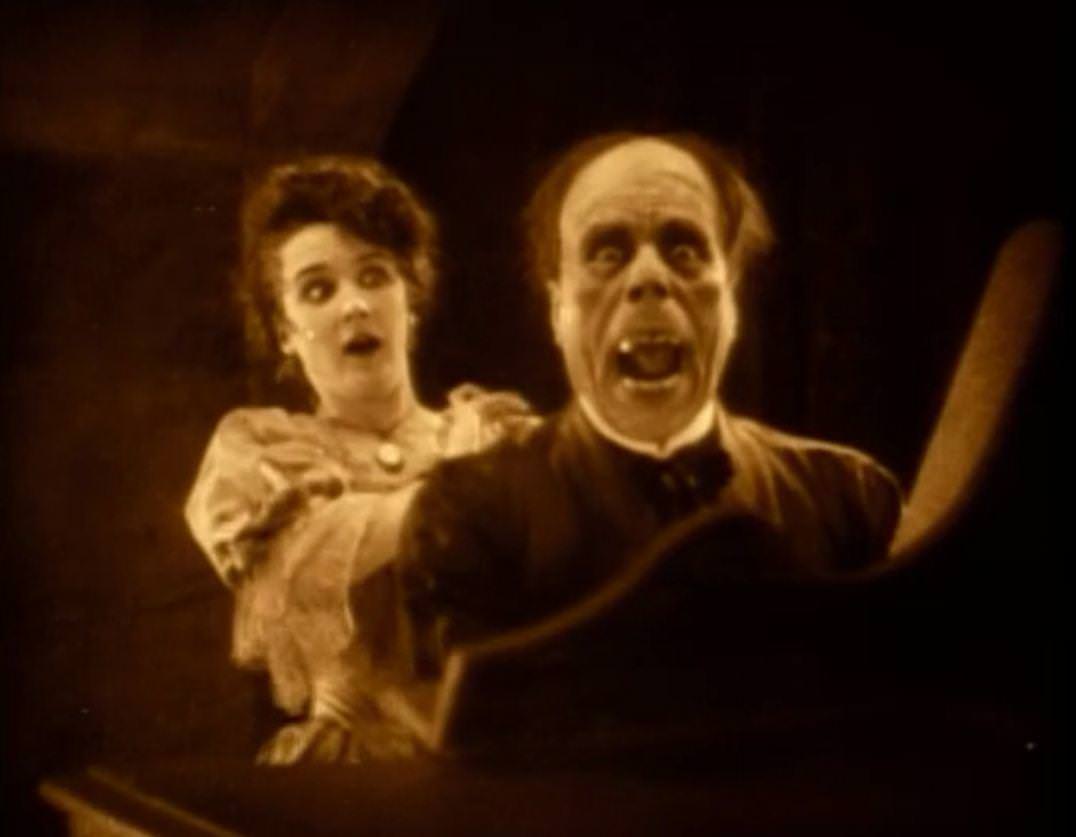
The Phantom of the Opera (1925) starred Lon Chaney Sr. as Erik, the Phantom, and Mary Philbin as Christine Daaé. Produced and released by Universal Pictures, the studio famously built an elaborate, full-scale replica of the Paris Opera House for the film—one of the most expensive sets of the silent era (parts of which still exist on Universal’s backlot).
The film was reissued in 1929 with synchronized music, sound effects, and limited dialogue sequences—though none featured Chaney himself, as he had already left Universal by then.
The scene where Christine removes the Phantom’s mask while he plays the organ is widely regarded as one of cinema’s most iconic moments. Chaney’s self-applied makeup—involving wire hooks, cotton, and greasepaint—was so shockingly grotesque that contemporary reports claimed some audience members fainted, and theatres were advised to keep smelling salts available.
(3) Song at Midnight (1937) (Chinese: 夜半歌聲Ye ban ge sheng)

Song at Midnight is a 1937 Chinese horror film directed by Ma-Xu Weibang (马徐维邦). It is widely considered China’s first significant horror film and a landmark in early Chinese cinema.
The story follows a disfigured former opera singer who secretly lives in an abandoned theatre and seeks revenge on those who betrayed him—an interpretation inspired by The Phantom of the Opera, set against the backdrop of 1930s Chinese opera and political unrest.
The film features a memorable score by composer Huang Zi (黄自), whose music and Ma-Xu’s expressionist cinematography and lighting create a haunting, dreamlike atmosphere.
More than eight decades after its release, Song at Midnight remains one of the most influential works in Chinese cinema, inspiring remakes (notably a 1995 version by Ronny Yu) and influencing generations of Chinese horror filmmakers.
(4) Phantom of the Opera (1943)

The 1943 Phantom of the Opera is a Technicolor remake by Universal Pictures, starring Claude Rains as Erique Claudin (the Phantom) and Susanna Foster as Christine Dubois. The film reused the Paris Opera House set originally built for the 1925 Lon Chaney version—one of the most famous sets in Universal’s history.
As in the earlier film, it includes the spectacular chandelier-crash sequence, though the 1943 version shifts its tone away from horror and toward lavish operatic melodrama and romance.
In this adaptation, the Phantom’s disfigurement results from acid being thrown in his face, rather than a congenital deformity—an invention that proved influential, becoming a recurring feature in later screen versions. His motivation is also altered: Claudin’s descent into madness begins when the opera’s conductor steals credit for his musical compositions.
(5) Phantom of the Opera (1962)

The 1962 Phantom of the Opera is a British Gothic horror film produced by Hammer Film Productions and directed by Terence Fisher. It stars Herbert Lom as the Phantom, Heather Sears as Christine Charles, and Edward de Souza as Harry Hunter.
This adaptation relocates the story to Victorian London rather than Paris, a hallmark of Hammer’s reinterpretations of classic horror tales. The film emphasizes both romantic tragedy and atmospheric horror, blending lavish period production design with Hammer’s signature Gothic style.
The musical score by Edwin Astley and Arthur Grant’s cinematography enhance its haunting, operatic tone. Although less violent than Hammer’s usual fare, it focuses strongly on the Phantom’s sympathetic and tragic nature—a wronged composer turned recluse beneath the opera house.
(6) Phantom of Paradise (1974)

Phantom of the Paradise is a 1974 rock-horror musical satire written and directed by Brian De Palma. It stars William Finley as Winslow Leach (the Phantom), Paul Williams as Swan, and Jessica Harper as Phoenix.
The story follows Winslow Leach, a gifted composer whose music is stolen by the corrupt producer Swan. After a brutal accident leaves him disfigured, Winslow dons a mask and becomes the Phantom, haunting Swan’s new concert hall, The Paradise, in an effort to reclaim his work and protect his muse.
Blending elements of The Phantom of the Opera, Faust, and The Picture of Dorian Gray, the film features original songs by Paul Williams, striking expressionist visuals, and a sharp critique of the music industry. Though initially a box-office failure, it later gained cult status and is now celebrated as one of the most distinctive and inventive films of the 1970s.
(7) The Phantom of Hollywood (1974)

The Phantom of Hollywood is a 1974 television mystery-thriller film directed by Gene Levitt and starring Jack Cassidy as the titular Phantom. The story centers on a disfigured former studio employee who seeks revenge against the executives responsible for dismantling his beloved movie studio.
Set and filmed on the MGM backlot in Culver City, during its real-life demolition, the movie blends thriller, horror, and Hollywood nostalgia, serving as both a murder mystery and a eulogy for the Golden Age of film.
Supporting cast members include Jack Kruschen, Jackie Coogan, and Brooke Mills. Though often described as campy and melodramatic, it remains a cult favorite among fans of vintage Hollywood and 1970s made-for-TV cinema for its eerie atmosphere and behind-the-scenes setting.
(8) The Phantom of the Opera (1983)

The Phantom of the Opera (1983) is a made-for-television film directed by Robert Markowitz, starring Maximilian Schell as the Phantom and Jane Seymour as Christine. This adaptation retells Gaston Leroux’s classic story of a disfigured composer haunting the Paris Opera House, blending gothic romance and tragedy.
The film is noted for its lavish costumes, operatic performances, and emotional depth, with both Schell and Seymour delivering strong, sympathetic portrayals of their characters. While produced for TV, its production quality and faithful tone give it a cinematic feel, making it one of the more respected small-screen versions of the tale.
(9) The Phantom of the Opera (1987)

(10) The Phantom of the Opera (1989)
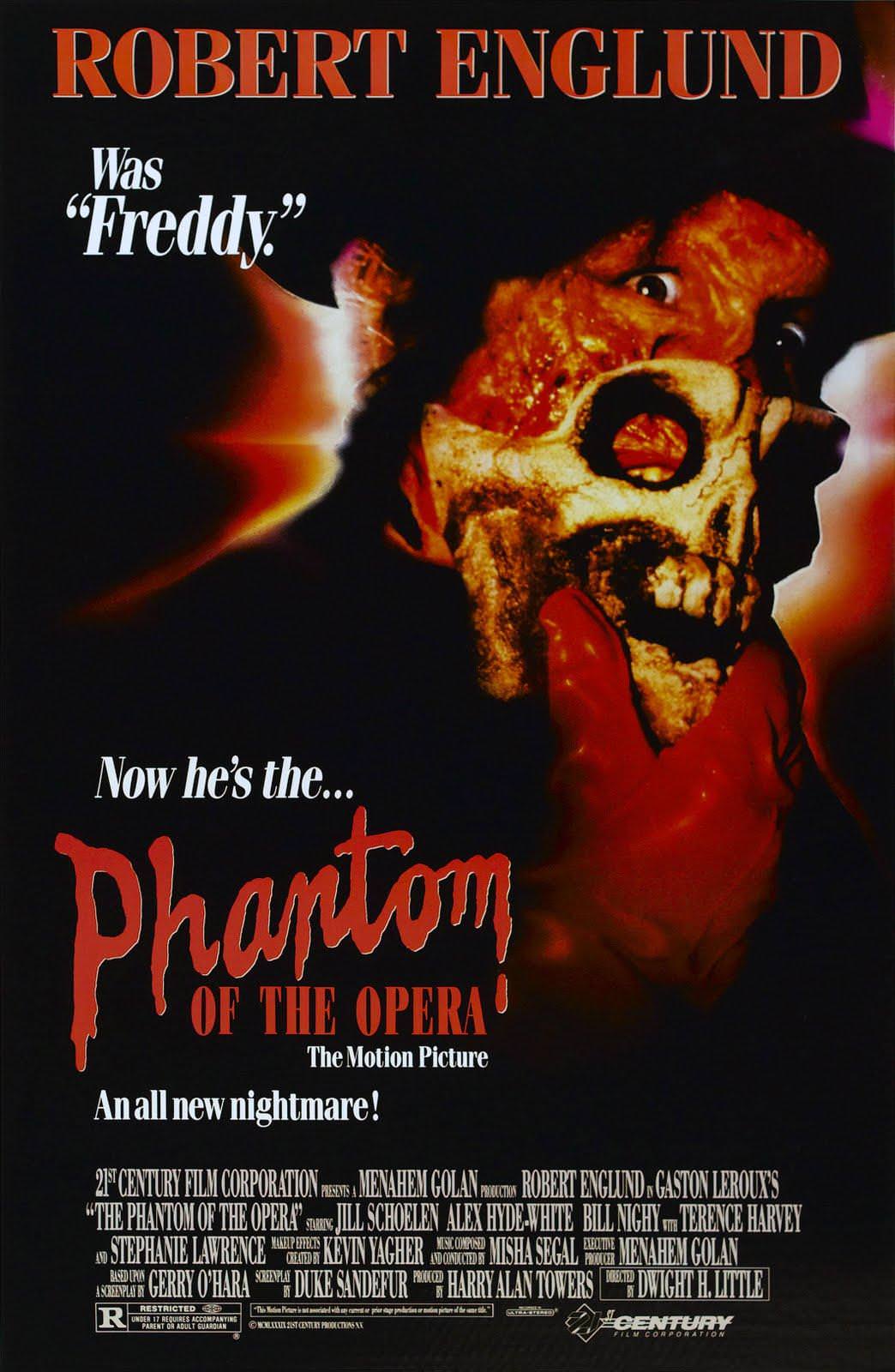
The Phantom of the Opera (1989) is a dark and violent reinterpretation of Gaston Leroux’s tale, directed by Dwight H. Little and starring Robert Englund—best known for his role as Freddy Krueger—as the Phantom, alongside Jill Schoelen as Christine.
This version embraces a gothic horror approach, combining gruesome imagery with a tragic undertone reminiscent of the original novel. It introduces a Faustian element, incorporating excerpts from Charles Gounod’s opera Faust and portraying the Phantom as a composer who sells his soul to the Devil so that his music will be loved. His horrific disfigurement is the Devil’s cruel twist, ensuring he can be loved only for his art, not his appearance.
A distinctive feature of this adaptation is the Phantom’s grotesque method of stitching pieces of skin to his face instead of wearing a traditional mask. Though graphic and unsettling, the film’s strong performances—particularly Englund’s tortured portrayal—lend it a chilling, memorable power, making it a cult favourite among fans of gothic and horror cinema.
(11) The Phantom of the Mall: Eric’s Revenge (1989)
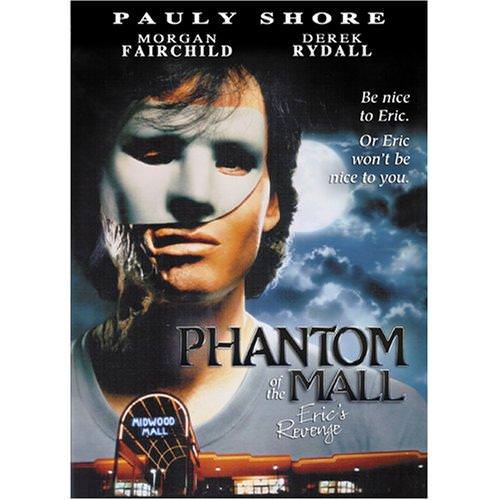
The Phantom of the Mall: Eric’s Revenge (1989) is a campy horror-thriller directed by Richard Friedman, starring Derek Rydall as Eric, Kari Whitman as Melody, and Pauly Shore in an early supporting role.
The film reimagines the Phantom of the Opera legend in a modern suburban setting: a year after a tragic fire at the construction site of a new shopping mall, the disfigured Eric secretly dwells within the mall’s hidden tunnels, haunting its halls and exacting revenge on those responsible for his death and the destruction of his home.
Filled with ’80s slasher tropes, synth-heavy music, and a blend of horror, melodrama, and dark humor, the film has since gained cult status among fans of B-movie horror. Though far from faithful to Leroux’s novel, The Phantom of the Mall remains a fun, nostalgic example of late-’80s genre filmmaking.
(12) The Phantom of the Opera (1990)

The Phantom of the Opera (1990) is a two-part television miniseries directed by Tony Richardson, offering a richly emotional and non-musical adaptation of Gaston Leroux’s 1910 novel. Unlike the well-known Andrew Lloyd Webber stage version, this production focuses on psychological depth, gothic atmosphere, and tragic romance, staying true to the tone of Leroux’s original work.
The story follows Christine Daaé (played by Teri Polo), a gifted young soprano whose meteoric rise at the Paris Opera House is guided by a mysterious benefactor — the Phantom (portrayed by Charles Dance). Living in the catacombs beneath the opera house, the Phantom is a brilliant but disfigured composer whose obsession with Christine grows increasingly dangerous as she falls in love with her childhood friend Raoul (Burt Lancaster’s son, Adam Storke).
What distinguishes this version is its deeply human portrayal of the Phantom. Charles Dance delivers a haunting and elegant performance, capturing both the genius and the anguish of a man longing for acceptance. His Phantom is tragic rather than monstrous — a figure shaped by loneliness and rejection.
The production is lavishly staged, with opulent sets and gothic cinematography that vividly evoke the grandeur of the Paris Opera House. Though not a musical, it features operatic arias performed by professional singers — Michèle Lagrange as Christine’s singing voice and Gérard Garino as the Phantom’s — adding authenticity and emotional resonance to the film’s musical scenes.
Teri Polo brings warmth and quiet strength to Christine, while her chemistry with Dance lends the story both tenderness and tension. Together, they anchor the narrative as a tragic exploration of beauty, obsession, and the yearning to be seen and loved.
In essence, The Phantom of the Opera (1990) is a visually stunning and emotionally profound adaptation that strips away spectacle to reveal the heart of Leroux’s story — the pain of genius unrecognized and love unreturned. It remains one of the most underrated and faithful screen versions of this timeless tale.
(13) The Phantom Of the Opera | O Fantasma da Ópera (1991 mini-series)

Fantasma da Ópera (1991) is a Brazilian television mini-series produced by TV Manchete, directed by Flávio Colatrello Jr., and inspired by Gaston Leroux’s classic novel. Set in the Theatro Municipal in Rio de Janeiro, the story reimagines the Phantom of the Opera legend within a rich Brazilian cultural and musical context.
The plot begins with a violent murder during a production of Marília de Dirceu. When the celebrated diva La Carlota Alencastro is replaced by Cristina Andreatti (daughter of the renowned composer Gasto Andreatti), Cristina becomes entangled with a mysterious figure — Alfredo do Vale, a disfigured musician believed to have died in a horrific accident years earlier.
As Cristina’s career blossoms, she discovers the truth behind Alfredo’s haunting presence and his desperate need to prove that Marília de Dirceu was his true composition. What follows is a tale of love, obsession, artistic rivalry, and moral decay, infused with the operatic passion and gothic elegance of its setting.
The mini-series distinguishes itself through its lush period production, dramatic performances, and a uniquely Brazilian reinterpretation of Leroux’s themes. It explores how love and genius can intertwine with madness and vengeance, making it both a tribute to the original and a culturally resonant work in its own right.
(14) The Phantom Lover (1995)
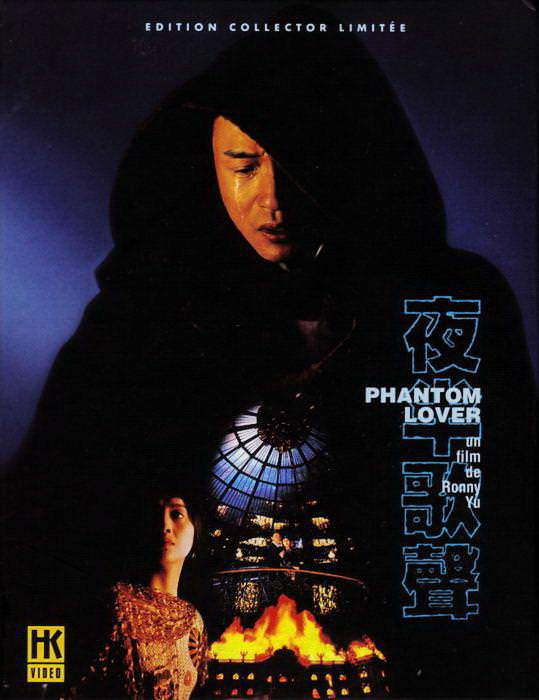
The Phantom Lover (1995) is a romantic tragedy directed by Ronny Yu, starring Leslie Cheung, Wu Chien-Lien (Wu Junmei), and Li Xiaoran. Set in 1930s Shanghai, the film is a loose remake of the 1937 classic Song at Midnight — itself inspired by The Phantom of the Opera.
The story follows Song Danping (played by Leslie Cheung), a celebrated singer and actor whose love affair with the beautiful Du Yunyan (Wu Chien-Lien) ends in tragedy when he is horribly disfigured by her jealous fiancé and retreats into the shadows of his ruined theatre. Years later, a new troupe revives the theatre, and the legend of the ghostly singer begins to resurface.
Visually opulent and emotionally haunting, the film combines lush period cinematography, lavish costumes, and Cheung’s powerful, melancholic performance to create a deeply moving meditation on love, loss, and artistic devotion. With its operatic tone and heartbreaking finale, The Phantom Lover stands as one of the most beautiful and enduring romantic dramas in Hong Kong cinema.
(15) The Phantom of the Opera | Il Fantasma dell’Opera (1998)
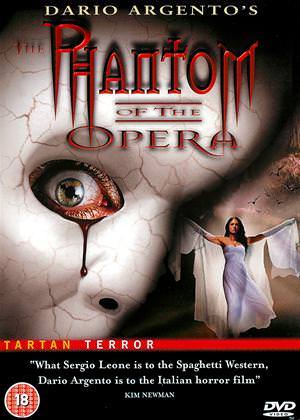
Il Fantasma dell’Opera (1998) is an Italian romantic horror film directed by Dario Argento, starring Julian Sands as the Phantom and Asia Argento as Christine Daaé. Loosely based on Gaston Leroux’s novel, this version takes significant creative liberties, blending gothic horror with surrealism — a hallmark of Argento’s filmmaking style.
In this adaptation, the Phantom is not disfigured, but rather a handsome man who was abandoned as a baby and raised by rats in the catacombs beneath the Paris Opera House. Over time, he develops a strange telepathic connection with the rats and a deep, obsessive love for Christine, a young singer at the opera. As he grows increasingly unstable, the Phantom begins murdering those he believes desecrate the sanctity of the opera.
Visually lavish and operatically macabre, the film features Argento’s signature blend of beauty and brutality, marked by intense violence, baroque set design, and an unsettling atmosphere. Though divisive among critics, it remains a curious and stylized interpretation of the Phantom myth, notable for its bold deviations and dreamlike tone.
(16) The Phantom of the Opera (2004)

The Phantom of the Opera (2004) is a musical drama film directed by Joel Schumacher, adapted from Andrew Lloyd Webber’s 1986 stage musical, which was itself based on Gaston Leroux’s 1910 novel.
Set in 19th-century Paris, the story follows Christine Daaé (played by Emmy Rossum), a gifted young soprano who becomes the object of obsession for the mysterious Phantom (Gerard Butler), a disfigured musical genius living beneath the Paris Opera House. As Christine’s fame grows and her love for Raoul, Vicomte de Chagny (Patrick Wilson) rekindles, the Phantom’s jealousy and longing drive him to desperate and tragic extremes.
This adaptation remains faithful to the stage musical, featuring Andrew Lloyd Webber’s iconic score and operatic spectacle, enhanced by elaborate set design, lush costumes, and cinematic visuals. While the film received mixed critical reviews, it was widely praised for its visual grandeur, passionate performances, and hauntingly beautiful soundtrack — earning three Academy Award nominations for Art Direction, Cinematography, and Original Song (“Learn to Be Lonely”).
In essence, Schumacher’s The Phantom of the Opera (2004) captures the romantic and tragic essence of the original musical, bringing its sweeping emotion and timeless love story vividly to life on screen.
Also see our fun facts about this movie here.
(17) The Phantom of the Opera at the Royal Albert Hall (2011)
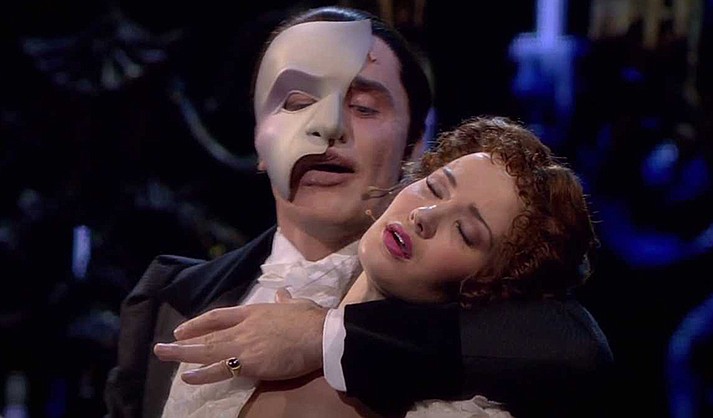
The Phantom of the Opera at the Royal Albert Hall (2011) is a spectacular live production staged to celebrate the 25th anniversary of Andrew Lloyd Webber’s legendary musical. Filmed at London’s iconic Royal Albert Hall, the performance stars Ramin Karimloo as the Phantom and Sierra Boggess as Christine Daaé, both reprising their acclaimed roles from earlier productions.
Accompanied by a full orchestra and enhanced with cinematic lighting, grand staging, and richly detailed costumes, this event captures the full emotional and visual power of the original stage musical. Classic numbers such as “The Music of the Night,” “All I Ask of You,” and “The Phantom of the Opera” are delivered with breathtaking passion and precision.
The production was filmed and broadcast worldwide, later released on Blu-ray and DVD, allowing audiences everywhere to experience the magic, romance, and grandeur of one of the most beloved musicals ever written. For fans of theatre, The Phantom of the Opera at the Royal Albert Hall remains a definitive and unforgettable celebration of Lloyd Webber’s masterpiece.
(18) Love Never Dies (2012)

Love Never Dies (2010) is the official sequel to Andrew Lloyd Webber’s The Phantom of the Opera, featuring music by Andrew Lloyd Webber, lyrics by Glenn Slater, and a book by Ben Elton and Frederick Forsyth (based on Forsyth’s unpublished novel The Phantom of Manhattan).
Set ten years after the events in Paris, the story finds the Phantom living under a new identity as Mr. Y, the mysterious owner of Phantasma, a fantastical amusement park on Coney Island, New York. When Christine Daaé, now a world-famous soprano, arrives in America with her husband Raoul and their young son Gustave, the Phantom is drawn back into her life — reigniting old passions, jealousies, and heartbreaks.
The musical features lush orchestrations, soaring melodies, and standout songs such as “’Til I Hear You Sing,” “Beneath a Moonless Sky,” and “Love Never Dies.” Though initially met with mixed reviews, it has since gained appreciation for its emotional depth, striking visuals, and powerful performances, particularly in later productions such as the acclaimed 2012 Australian staging filmed for international release.
Love Never Dies offers a poignant continuation of the Phantom and Christine’s tragic love story — a visually stunning and musically rich companion to the beloved original.
(19) Phantom (Disney+, Upcoming)

A new Disney+ young-adult reimagining of The Phantom of the Opera is currently in development, directed and produced by Kenny Ortega (High School Musical, Descendants). This fresh adaptation aims to modernize Gaston Leroux’s classic story for a new generation, reimagining the Phantom–Christine relationship within a contemporary setting.
Blending elements of mystery, romance, and coming-of-age drama, this version seeks to explore the emotional complexity of its iconic characters through a modern lens. While still in early production stages, the project promises to introduce the timeless tale of love, obsession, and music to a new audience of young viewers on Disney+.
(20) The Phantom of the Opera (French Contemporary Adaptation, In Production)
A new French-language, modern reinterpretation of the classic The Phantom of the Opera by Gaston Leroux is currently in production. It is directed by Alexandre Castagnetti and stars Deva Cassel as Anastasia, along with Julien De Saint Jean and Romain Duris.
Set in contemporary Paris, the story follows Anastasia, a young newcomer drawn into a mysterious—and myth-haunted—opera production. The dark legend of a masked figure lurking beneath the opera house resurfaces when Anastasia takes the lead role and meets the enigmatic Phantom. The film explores themes of obsession, artistry, ambition, and the line between genius and madness. This adaptation promises to bring the iconic tale into the 21st century, merging gothic myth with modern style and youthful sensibility.
(21) Andrew Lloyd Webber’s Phantom Remake (In Development)
Composer Andrew Lloyd Webber has revealed that a new film adaptation of his hit musical The Phantom of the Opera is in the early stages of development. While no official casting or production timeline has been announced, Webber has hinted that the remake will feature new performers and updated visuals, reimagining the story for a new generation of audiences.
This upcoming version is expected to stay true to the spirit of the original 1986 stage musical, while benefiting from advances in cinematic technology and design since the 2004 Joel Schumacher film. Still in its conceptual phase, the project has already sparked excitement among fans eager to see how Webber’s timeless music and gothic romance will be brought to life once again on screen.
(22) Phantom: The Anime (Planned)
In 2025, Qubic Pictures and LW Entertainment announced plans for an anime adaptation of The Phantom of the Opera musical — the first official animated musical version of Andrew Lloyd Webber’s iconic work.
This adaptation aims to explore the story’s darker psychological and romantic themes through a stylized anime lens, blending the grandeur of musical theatre with the expressive artistry of Japanese animation. While production details remain limited, the project promises a bold reimagining of the Phantom–Christine story for a new generation of viewers, uniting fans of both anime and musical storytelling.
There have been over twenty versions of The Phantom of the Opera — from silent films to musicals and modern remakes — but which one do you think captures the Phantom best? Visit our YouTube channel and let us know your favorite!
Share this article
