
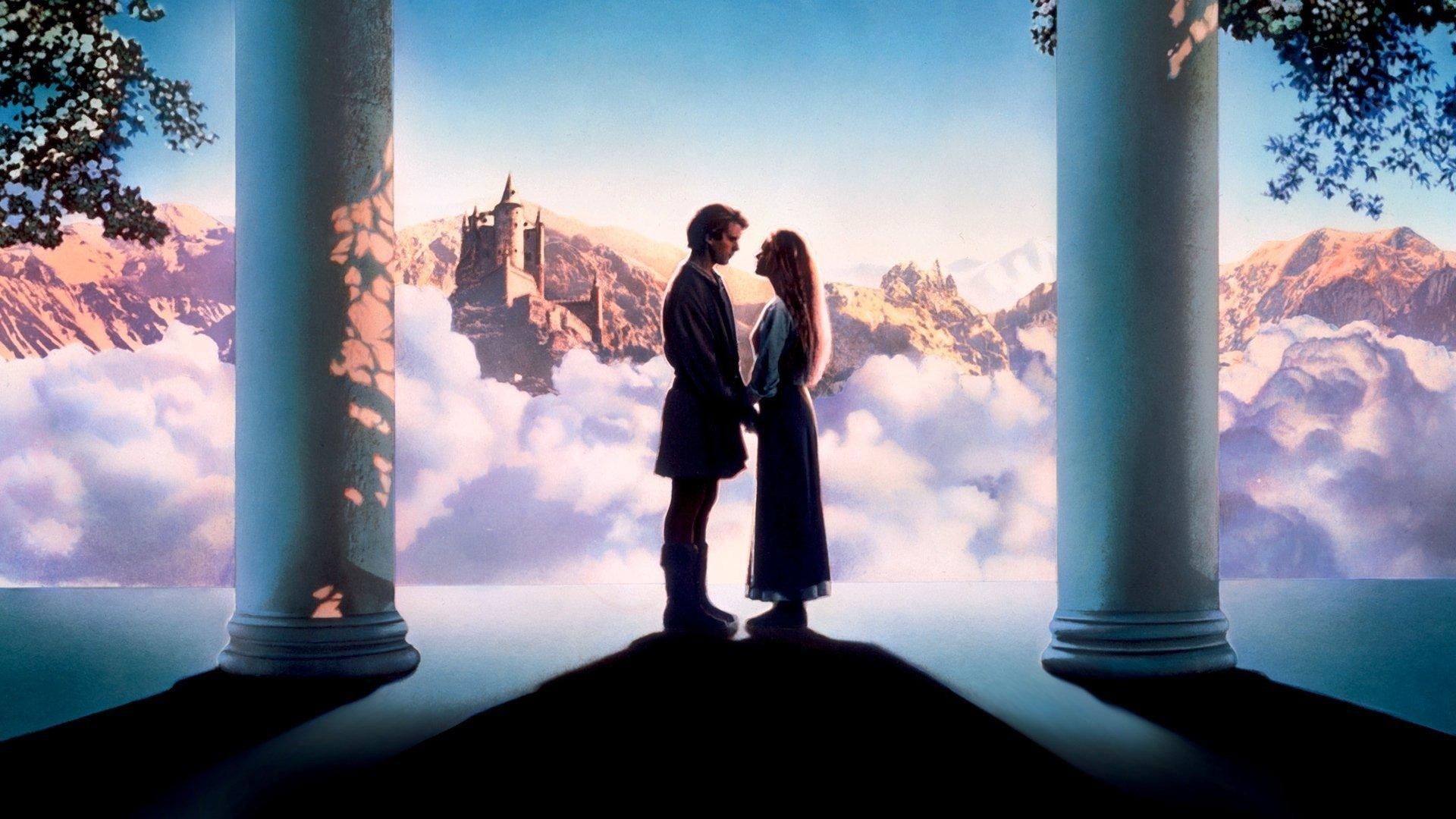
The Princess Bride: How a modest 1987 fantasy became one of cinema’s most beloved cult classics
Some films become classics because they were enormous successes from the moment they appeared. Others take a much stranger route, slowly passing from one generation to another until their dialogue, characters and stories become part of popular culture.
The Princess Bride belongs firmly in the second category.
Released in 1987 and directed by Rob Reiner, the film combined romance, sword fighting, comedy, fairy-tale adventure and an unusually self-aware sense of humour at a time when Hollywood was not entirely sure how to sell something that seemed to belong to several genres at once. It performed respectably rather than spectacularly at the box office, but what happened afterwards transformed it into something far more significant.
Home video, television broadcasts and word of mouth allowed audiences to discover the film gradually. Over the following decades, lines such as “As you wish”, “Inconceivable!” and Inigo Montoya’s famous introduction became instantly recognisable even to people who had not watched the film in years.
Almost four decades after its release, The Princess Bride is no longer simply an admired fantasy comedy from the 1980s. It has become one of those rare films that people introduce to their children, quote with friends and return to repeatedly because its mixture of sincerity and absurdity still feels remarkably fresh.
It began with William Goldman and a very unusual book
Long before Westley and Buttercup reached cinemas, The Princess Bride existed as a 1973 novel by William Goldman, the acclaimed writer whose screenwriting credits would include Butch Cassidy and the Sundance Kid and All the President’s Men.
Even the book played games with storytelling conventions.
Goldman presented The Princess Bride as though it were his abridged version of an older work written by the fictional author S. Morgenstern. That elaborate joke allowed him to comment on the story while simultaneously telling it, creating a fairy tale that could be romantic and adventurous while also making fun of the traditions it was using.
Getting the story onto the screen proved surprisingly difficult. Interest existed for years, but the film only truly moved forward once Rob Reiner became involved.
Reiner had already demonstrated a remarkable ability to move between genres. After directing This Is Spinal Tap and The Sure Thing, he made the acclaimed coming-of-age drama Stand by Me. The Princess Bride presented a very different challenge because it required him to preserve the sincerity of Goldman’s story without allowing the comedy to turn the entire film into a parody.
That balance ultimately became one of the movie’s greatest strengths.
The framing story was far more important than it initially appeared
The film begins not in a distant kingdom but in an ordinary bedroom, where a sick boy played by Fred Savage is visited by his grandfather, played by Peter Falk.
The grandfather arrives with a book.
His grandson is not particularly enthusiastic, especially when the story appears to involve romance. He wants action, excitement and adventure rather than what he dismisses as a story filled with kissing.
The grandfather continues anyway.
This simple framing device completely changes the way the film operates. Rather than pretending its fairy tale is real, The Princess Bride openly acknowledges that somebody is telling us a story. The grandson reacts much like the audience does, becoming increasingly invested despite his initial scepticism.
Whenever the story threatens to become too romantic or too frightening, the film can return to the bedroom and remind us that this is a tale being passed from one generation to another.
By the ending, the grandson who originally wanted nothing to do with the book asks whether his grandfather might return and read it again.
That moment explains much of the film’s enduring appeal. The Princess Bride is not simply about a fairy tale. It is about why people continue telling fairy tales.
Buttercup and Westley give the film its fairy-tale beginning
Inside the story, we meet Buttercup, played by Robin Wright, and Westley, played by Cary Elwes.
Westley works on Buttercup’s farm and responds to her instructions with the same phrase every time: “As you wish.”
Eventually Buttercup realises that what he actually means is that he loves her.
Their relationship is intentionally presented with the simplicity of an old-fashioned fairy tale. Westley leaves to seek his fortune but is reported killed by the infamous Dread Pirate Roberts. Devastated, Buttercup eventually agrees to marry Prince Humperdinck, although she makes it clear that she does not love him.
Then she is kidnapped.
Her abductors are a wonderfully mismatched trio consisting of Vizzini, a Sicilian criminal mastermind played by Wallace Shawn, Inigo Montoya, a Spanish swordsman played by Mandy Patinkin, and Fezzik, an enormous but remarkably gentle man played by André the Giant.
What initially appears to be a straightforward kidnapping plot rapidly becomes something much stranger when a mysterious Man in Black begins following them.
The Man in Black sequence introduces almost every reason the film works
The pursuit across the Cliffs of Insanity leads to one of the best stretches of the entire film because the Man in Black must defeat each member of the kidnapping party according to their particular strength.
First comes Inigo.
Rather than immediately trying to kill one another, the two swordsmen behave with extraordinary politeness. They discuss technique, admire each other’s abilities and reveal that both have been fighting with their weaker hand before switching to their dominant one.
The resulting duel is elegant, funny and genuinely exciting.
Next comes Fezzik, whose physical strength makes a traditional fight almost impossible. The Man in Black therefore has to defeat him through strategy rather than force.
Then comes Vizzini and the famous battle of wits involving poisoned wine, elaborate reasoning and an opponent who is not quite as clever as he believes himself to be.
Within a relatively short section of the film, The Princess Bride delivers a sword fight, wrestling match and intellectual duel without repeating itself.
It also reveals that the mysterious pursuer is Westley.
The sword fight between Westley and Inigo remains one of the film’s greatest achievements
The duel between Westley and Inigo has become one of the most celebrated sword fights in popular cinema, partly because it is almost the complete opposite of the frantic editing that characterises many modern action sequences.
Cary Elwes and Mandy Patinkin trained extensively for the scene and learned to fence with both hands. The sequence allows viewers to see the performers moving across the terrain, exchanging dialogue and adjusting their fighting styles as the duel becomes increasingly elaborate.
The scene is also important because neither character actually hates the other.
Inigo has been ordered to stop Westley, while Westley needs to continue his pursuit of Buttercup. Their conflict is practical rather than personal, and they develop a strange respect for one another even while trying to win.
Westley eventually defeats Inigo but refuses to kill him.
That decision becomes extremely important later because the story is not finished with Inigo Montoya.
Inigo’s revenge story gives the comedy genuine emotional weight
If The Princess Bride contained only jokes and fairy-tale parody, it probably would not have survived as well as it has.
Inigo provides the film with something deeper.
His father was a gifted sword maker who created a special weapon for a six-fingered man. When the customer refused to pay the agreed price, Inigo’s father challenged him and was killed.
Inigo witnessed the murder.
He has spent much of his life preparing for the moment when he can finally confront the six-fingered man responsible.
His rehearsed introduction has since become one of cinema’s most famous lines, but its popularity can sometimes obscure how much emotion surrounds it. For Inigo, the words are not simply a catchphrase. They represent years of grief, obsession and purpose.
Mandy Patinkin gives the character warmth and humour throughout the film, which makes the eventual confrontation with Count Rugen considerably more powerful.
The movie may be a comedy, but it never treats Inigo’s grief as a joke.
André the Giant gave Fezzik much more than physical size
Fezzik could easily have been written as nothing more than the strong member of Vizzini’s group.
Instead, André the Giant turned him into one of the film’s most lovable characters.
Fezzik is enormously powerful but dislikes unnecessary violence. He enjoys rhyming, worries about his friends and seems almost apologetic whenever circumstances require him to hurt someone.
His friendship with Inigo becomes particularly important during the second half of the story. When Inigo loses his sense of direction after Vizzini’s death, Fezzik helps him continue searching for the six-fingered man.
Their friendship adds warmth to a film already filled with memorable relationships.
André’s own physical difficulties also made the production more complicated than audiences would have realised. Years of wrestling and the effects of acromegaly had left him in significant pain, meaning the filmmakers had to adapt some of the physical scenes around what he could safely perform.
None of that is visible in the finished character.
Fezzik simply feels enormous, kind and completely unforgettable.
Prince Humperdinck is far more dangerous than his name suggests
Chris Sarandon’s Prince Humperdinck initially appears to belong to the tradition of pompous fairy-tale royalty, but the character becomes increasingly sinister as the story develops.
He does not intend to marry Buttercup because he loves her.
His plan is to use her death to provoke a war.
This makes Humperdinck an interesting contrast with the film’s more colourful characters. He does not possess supernatural powers, extraordinary swordsmanship or unusual strength. His real weapon is authority.
Because he is the prince, he assumes that everybody else can simply be manipulated into serving his plans.
Count Rugen, played by Christopher Guest, provides the physical cruelty that Humperdinck largely delegates to others. Rugen is also the six-fingered man Inigo has spent years searching for, bringing the film’s different storylines together.
The pair provide exactly the kind of villains this particular fairy tale requires. They are dangerous enough for the stakes to matter but never so grim that they destroy the film’s humour.
The Fire Swamp turns fairy-tale danger into comedy
After Westley rescues Buttercup, they escape into the Fire Swamp, a place filled with three particularly memorable dangers.
There are flame spurts, patches of lightning sand and the Rodents of Unusual Size.
Westley initially claims not to believe that the giant rodents exist shortly before discovering that they most definitely do.
The sequence demonstrates the film’s ability to make fun of fantasy conventions while still using them effectively. The Fire Swamp genuinely feels dangerous, but the dangers are also slightly ridiculous.
That balance is difficult to achieve.
If the film mocked everything too aggressively, viewers would stop caring whether the characters survived. If it treated everything too seriously, many of its strangest ideas would become absurd for the wrong reasons.
Rob Reiner consistently finds the space between those extremes.
Billy Crystal almost steals the film with a relatively small role
By the time Westley reaches Miracle Max, he has been tortured so severely by Count Rugen that he appears to be dead.
Fortunately, he is only mostly dead.
Billy Crystal’s Miracle Max enters the story relatively late but immediately creates one of the film’s funniest sequences. Joined by Carol Kane as Valerie, Max examines Westley, argues about whether helping him is worthwhile and eventually produces the miracle pill that allows the heroes to continue their mission.
The scene works because it arrives at precisely the moment when the film could have become overly serious.
Westley is apparently dead, Buttercup is being forced into marriage and Inigo still has not completed his lifelong quest. Rather than allowing the story to sink into melodrama, the film introduces an elderly miracle worker who spends much of his screen time complaining.
Crystal and Kane turn a small section of the movie into one of its most memorable.
Westley is the hero, but Inigo gets the emotional climax
As Westley, Inigo and Fezzik infiltrate the castle, the story separates their objectives.
Westley needs to reach Buttercup.
Inigo needs to find Count Rugen.
When the two finally confront one another, Rugen initially appears to have the advantage. Inigo is wounded, and the revenge quest that has defined most of his life seems about to end in failure.
Then he begins repeating the words he has practised for years.
The line becomes more powerful every time he says it.
Eventually Inigo defeats Rugen and completes the mission that has shaped his entire adult life.
His response afterwards is surprisingly poignant because victory leaves him without the purpose that has sustained him for so long.
Westley later suggests that Inigo might make an excellent Dread Pirate Roberts.
Even in the aftermath of revenge, the film quietly gives him the possibility of another life.
The Dread Pirate Roberts is one of the film’s cleverest ideas
Westley’s transformation from farm boy into the Dread Pirate Roberts sounds like the sort of impossible reinvention found in traditional adventure stories.
The explanation is far more amusing.
There is no single Dread Pirate Roberts.
The identity has been passed from one man to another because the reputation is much more useful than the actual person behind it. Once sailors hear that the Dread Pirate Roberts is approaching, they surrender because generations of stories have convinced them that resistance is pointless.
The idea fits perfectly with a film so interested in storytelling.
Roberts exists because people believe the story.
Westley becomes powerful because he inherits the story.
When he eventually considers passing the name to someone else, the legend can simply continue.
In a film filled with fairy-tale identities, this may be the most clever one of all.
Buttercup is both part of the fairy tale and slightly trapped by it
Robin Wright was still near the beginning of her career when she played Buttercup, years before roles in projects such as Forrest Gump, House of Cards and Wonder Woman made her one of the most familiar actors of her generation.
Buttercup is deliberately written as a traditional fairy-tale princess in several respects. She is beautiful, she is kidnapped and a significant part of the story revolves around rescuing her.
At the same time, the film regularly allows her to push against that role. She argues with Westley, challenges Humperdinck and is prepared to take drastic action rather than surrender completely to the situation being imposed upon her.
Viewed from a modern perspective, some elements of the character inevitably feel tied to the fairy-tale traditions the film was both using and parodying. Buttercup does not have the same kind of independent adventure that many contemporary fantasy heroines would receive.
Yet that tension is also part of what The Princess Bride is doing.
It embraces familiar storybook characters while repeatedly reminding us that we are watching a story about stories.
The film’s greatest trick is that it makes fun of fairy tales without becoming cynical about them
Many films parody genres by demonstrating that the filmmakers believe those genres are ridiculous.
The Princess Bride does something much more difficult.
It makes jokes about fairy tales because it loves them.
The heroic declarations are exaggerated, but heroism still matters. True love is teased relentlessly, yet the film ultimately believes in it. Villains are ridiculous, but they remain dangerous. Sword fights contain jokes, but the swordsmanship is treated seriously.
This allows the audience to laugh at the conventions without feeling embarrassed for enjoying them.
The same quality would later appear in films such as Stardust, which similarly understood that fantasy could be playful without needing to reject sincerity.
That balance has become one of the main reasons The Princess Bride has aged so well.
The film was successful, but it wasn’t initially a phenomenon
The Princess Bride opened in American cinemas in September 1987.
Its theatrical run was respectable rather than spectacular, eventually earning around $31 million worldwide against a production budget reported at approximately $15 to $16 million.
That meant it was not a major failure, but neither did it immediately resemble the cultural phenomenon it would later become.
Part of the problem was simple: the film was difficult to describe.
Was it a children’s movie?
A romantic comedy?
A fantasy?
A parody?
An adventure film?
The answer was essentially all of them, which made the film distinctive but complicated its marketing.
The movie’s real explosion in popularity came afterwards.
VHS helped create the Princess Bride generations
Home video changed the destiny of many films during the 1980s and 1990s, but The Princess Bride was almost perfectly suited to repeated viewing.
It is filled with dialogue that becomes funnier once viewers know it is coming. Children can enjoy the adventure, teenagers can appreciate the romance and adults can recognise the satire underneath both.
Families also began passing it down.
That matters because it mirrors the movie’s framing device. The film begins with an older generation sharing a story with a younger one, and over the decades The Princess Bride itself became exactly that kind of story.
Parents who watched it on VHS later introduced it to their children. Those children became adults and repeated the process.
The movie essentially became the book that Peter Falk brings into Fred Savage’s bedroom.
Its dialogue escaped the film
Very few movies produce one genuinely famous line.
The Princess Bride produced several.
“As you wish” became shorthand for Westley and Buttercup’s romance. Vizzini’s constant declaration of “Inconceivable!” became one of the film’s most frequently repeated jokes. Miracle Max’s explanation of the difference between dead and mostly dead became another favourite.
Then there is Inigo Montoya.
His introduction to Count Rugen has become one of the most recognisable lines in film history, quoted, referenced and parodied across television, movies, online culture and everyday conversation.
The remarkable part is that the dialogue survives outside the movie without losing its impact inside it.
That does not always happen with heavily quoted films.
In The Princess Bride, knowing the lines often makes returning to the film more enjoyable rather than less.
The National Film Registry eventually made its cultural status official
By 2016, the film’s transformation from modest theatrical success to American cultural institution had become impossible to ignore.
That year, The Princess Bride was selected for preservation in the United States National Film Registry.
The registry recognises films considered culturally, historically or aesthetically significant, placing Reiner’s fairy-tale adventure alongside some of the most important works in American cinema.
It was an extraordinary destination for a movie whose appeal had initially been difficult for marketers to explain.
What audiences understood over time was that The Princess Bride did not need to fit neatly into a single genre.
Its refusal to do so was part of its strength.
The cast makes revisiting the film even more rewarding
Watching The Princess Bride today means encountering several performers at fascinating points in their careers.
Robin Wright was only beginning the film career that would eventually include major dramatic roles and award recognition. Cary Elwes would remain permanently associated with Westley while building a career across comedy, horror, drama and television.
Mandy Patinkin would go on to an extensive career on stage and screen, but Inigo Montoya remains one of his most beloved performances.
Christopher Guest later became known for his own influential mockumentary films, while Wallace Shawn continued appearing in everything from serious drama to Toy Story.
Then there is André the Giant, whose Fezzik became one of the most affectionate screen portrayals of the legendary wrestler.
Billy Crystal and Carol Kane appear for only a short section of the story yet somehow feel essential to the film’s identity.
It is an ensemble in which almost every supporting character seems to have become somebody’s favourite.
Nearly forty years later, the film still attracts audiences
As The Princess Bride approaches its 40th anniversary in 2027, its continuing popularity is remarkable.
Cary Elwes has spent years participating in screenings and live events connected to the film, often encountering audiences who were not even born when it was released.
That longevity demonstrates something more important than nostalgia.
Nostalgia can encourage people to revisit an old favourite, but it cannot guarantee that younger audiences will connect with it.
The Princess Bride continues to work because the basic mechanics of the story remain effective. The jokes are funny, the adventure moves quickly, the romance is simple enough to feel timeless and the performances are committed enough to prevent the satire from becoming empty.
The film never looks down on the audience for enjoying a fairy tale.
Rob Reiner knew sincerity mattered
Much of the film’s success belongs to Rob Reiner’s direction.
The temptation with material this self-aware would have been to exaggerate everything until the characters became nothing more than punchlines. Reiner instead treats the story’s emotions seriously even when the situations are ridiculous.
When Inigo discusses his father, the film allows him to be genuinely sad.
When Westley and Buttercup reunite, their relationship is allowed to matter.
When the grandfather finishes reading, the affection between him and his grandson is not undercut by another joke.
Those moments give the comedy something to push against.
Without them, The Princess Bride might have been amusing in 1987 but difficult to care about four decades later.
Why The Princess Bride still works
There are many reasons the film has survived, but perhaps the most important is that it offers different things to viewers at different ages.
Children can watch an adventure involving pirates, giants, sword fights and giant rats. Teenagers may become more invested in Westley and Buttercup’s romance. Adults are more likely to notice the satire, the storytelling structure and the way the film plays with familiar genre conventions.
Then, eventually, some of those adults become the person showing the movie to somebody younger.
At that point, the framing story becomes even more meaningful.
The grandfather is not simply reading a book to his grandson. He is introducing him to a story he believes deserves to survive another generation.
Audiences have been doing exactly the same thing with The Princess Bride for decades.
A cult classic that became something bigger
Calling The Princess Bride a cult film is accurate, but after almost forty years it may also undersell what happened to it.
Cult films usually belong passionately to a particular audience.
The Princess Bride gradually escaped those boundaries.
Its dialogue entered popular culture. Its characters became instantly recognisable. Its screenplay became widely admired and the film was eventually preserved in the National Film Registry.
Most importantly, it became one of those films people keep sharing.
That may explain why the movie feels so comfortable nearly four decades after its release. Beneath all the fencing, fighting, torture, revenge, giants, monsters, chases, escapes, true love and miracles, The Princess Bride has always been about the pleasure of hearing a really good story.
The sick boy who initially complains about the kissing eventually wants to hear it again.
Millions of viewers apparently agreed with him.
As the film approaches its 40th anniversary, people are still returning to Florin, still climbing the Cliffs of Insanity and still waiting for Inigo Montoya to find the six-fingered man.
For a film released in 1987 without becoming an immediate blockbuster, that is a fairly extraordinary happily ever after.
Share this article
