
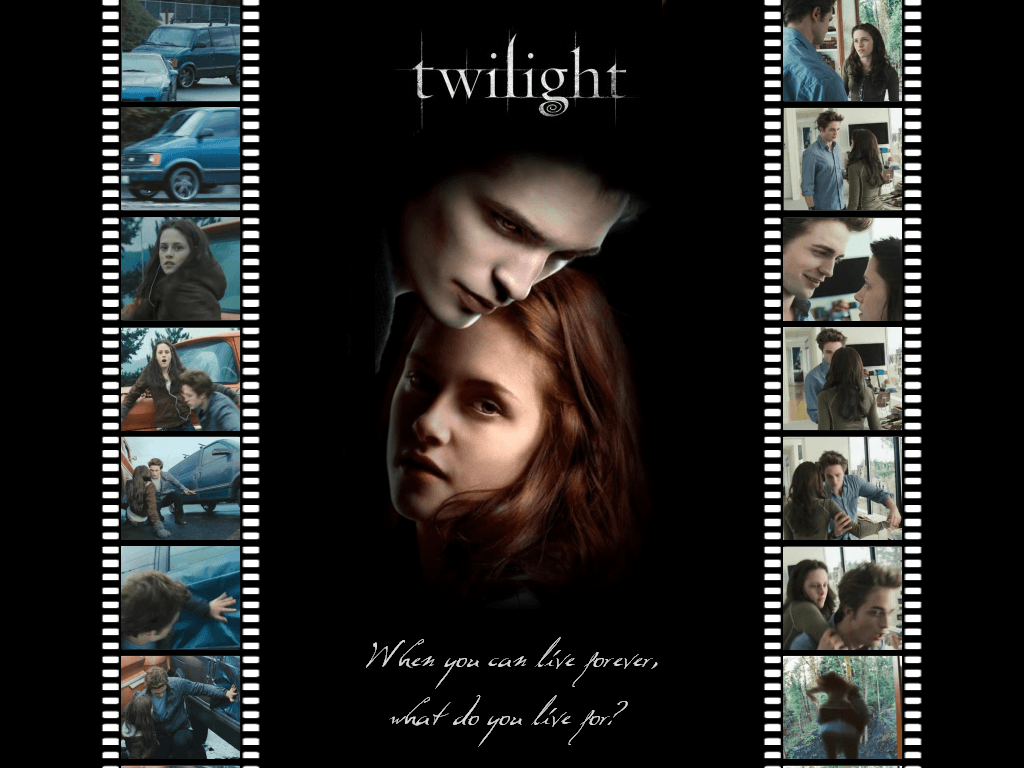
The Twilight Saga at 20: How a vampire romance became a pop-culture phenomenon
When Stephenie Meyer published Twilight in 2005, few could have predicted that the story of an ordinary teenager falling in love with a vampire would become one of the defining pop-culture phenomena of the 2000s.
What began with Bella Swan moving to the rainy town of Forks, Washington, expanded into four main novels, five blockbuster films, companion books, graphic novels, collector editions and one of the most passionate fandoms of its era.
Twenty years later, Twilight has entered an interesting new phase.
The original teenage audience has grown up, nostalgia for the 2000s has brought a wave of reassessment and a younger generation is discovering Bella, Edward and Jacob through streaming, social media and new editions of the books. At the same time, the franchise is moving forward again, with Netflix developing an animated adaptation of Midnight Sun that will revisit the original story from Edward Cullen’s perspective.
Whether you loved Twilight, disliked it or spent the late 2000s insisting you were Team Edward or Team Jacob, its impact is difficult to ignore.
Twilight began with a dream
Stephenie Meyer has said that the idea for Twilight came from a dream she had on 2 June 2003.
The dream involved a human girl and a vampire sitting in a meadow discussing the fact that they were in love while confronting one very serious problem: the vampire was also struggling with the desire to kill her.
That image developed into Bella Swan and Edward Cullen.
Meyer began writing what would eventually become Twilight, despite having no established career as a novelist at the time. The book was published in October 2005 and rapidly grew into a publishing phenomenon.
The central concept was immediately accessible. Bella is an apparently ordinary seventeen-year-old who moves from Phoenix to Forks to live with her father, Charlie. At her new school, she becomes fascinated by Edward Cullen and his unusually beautiful, secretive family.
She eventually discovers that the Cullens are vampires who have chosen to survive on animal blood rather than hunt humans.
Edward and Bella fall in love despite the obvious danger created by their relationship, establishing the central conflict that drives much of the saga.
The books became much more than one supernatural romance
The main saga consists of Twilight, New Moon, Eclipse and Breaking Dawn, published between 2005 and 2008.
Each book expands the supernatural world around Bella while also changing the nature of the central conflict.
Twilight is largely a supernatural romance and mystery. Bella discovers Edward’s secret, becomes increasingly involved with the Cullen family and eventually attracts the attention of James, a nomadic vampire who decides to hunt her.
New Moon shifts the focus dramatically after Edward leaves Forks because he believes Bella will be safer without him. Bella becomes increasingly close to Jacob Black, whose own supernatural identity is then revealed.
Jacob and the other Quileute characters are commonly described as werewolves, particularly in discussions of the films, but Meyer’s mythology eventually distinguishes them as shape-shifters whose wolf forms are connected to their ancestry and supernatural abilities.
Eclipse brings the vampire and shape-shifter storylines together as Victoria creates an army of newborn vampires to attack the Cullens and kill Bella. The Cullens and Jacob’s pack form an uneasy alliance while Bella is forced to confront her feelings for both Edward and Jacob.
Breaking Dawn changes the story again. Bella and Edward marry, Bella becomes pregnant with Renesmee and nearly dies during childbirth before Edward transforms her into a vampire.
The final conflict centres on the Volturi, who mistakenly believe Renesmee is an immortal child and therefore represents a violation of vampire law.
The books move from teenage romance into increasingly elaborate supernatural mythology, family conflict and questions about immortality, identity and choice.
Bella Swan became one of YA fiction’s most debated heroines
Bella is one of the most recognisable protagonists in modern young adult fiction, but she has also remained one of its most argued-about characters.
At the beginning of the series she is quiet, introspective and uncomfortable with attention. She frequently describes herself as physically awkward and ordinary, particularly when compared with the almost impossibly beautiful vampires surrounding her.
Much of the criticism of Bella has focused on how heavily her emotional life revolves around Edward, particularly during New Moon. Her reaction to their separation became one of the most discussed elements of the series, with readers debating whether the relationship represented overwhelming romantic devotion or unhealthy emotional dependency.
Her transformation in Breaking Dawn changes the character considerably.
Human Bella often appears physically vulnerable in a supernatural world. Vampire Bella discovers that she possesses extraordinary self-control and a powerful defensive ability that allows her to shield others from supernatural mental attacks.
For the first time, she is no longer the physically fragile person everyone else must protect.
That transformation also fulfils something Bella has wanted throughout much of the saga. Unlike many fictional characters who become supernatural against their will, Bella actively chooses immortality.
Edward Cullen changed the modern vampire hero
Edward Cullen was born Edward Anthony Masen in 1901 and became a vampire during the 1918 influenza pandemic when Carlisle Cullen transformed him to save his life.
By the time Bella meets him, he has been seventeen years old for nearly a century.
Edward possesses the ability to hear other people’s thoughts, with one major exception: Bella.
That inability becomes one of the reasons he is initially fascinated by her.
The character combines several familiar gothic-romance ideas with Meyer’s reinterpretation of vampire mythology. Edward is dangerous but determined to control his predatory nature, enormously powerful but deeply self-critical and convinced that Bella deserves something safer than him.
The relationship between Bella and Edward became central to the franchise’s success, but it also generated significant criticism and discussion around jealousy, control, surveillance and the romanticisation of obsessive behaviour.
That debate has become part of Twilight’s legacy rather than something separate from it.
Modern audiences often revisit the relationship with a different perspective from readers who first encountered it as teenagers, which has helped fuel the continuing reassessment of the series.
Jacob Black became much more than the third point of a love triangle
Jacob begins as Bella’s friend but becomes increasingly important in New Moon after Edward leaves Forks.
His warmth and emotional openness contrast sharply with Edward’s restraint, helping create the Team Edward versus Team Jacob phenomenon that dominated much of the franchise’s original popularity.
Jacob eventually discovers that he can transform into a wolf and joins a supernatural community responsible for protecting its people from vampires.
His relationship with Bella becomes increasingly complicated because he loves her while knowing she remains emotionally attached to Edward.
The story later introduces one of the franchise’s most controversial developments when Jacob imprints on Bella and Edward’s daughter, Renesmee.
Within Meyer’s mythology, imprinting is portrayed as a supernatural bond rather than immediately romantic or sexual, particularly while Renesmee is a child. Even so, the storyline has remained uncomfortable and controversial for many readers and viewers.
It is one of several aspects of Twilight that contemporary audiences frequently discuss differently from fans during the franchise’s original peak.
The Cullen family gave Twilight a much larger world
One of the reasons Twilight expanded so successfully was the Cullen family.
Carlisle Cullen is the compassionate doctor who created the family and developed the philosophy that vampires do not have to kill humans to survive. Esme serves as the emotional centre of the household, while Edward’s siblings each bring their own histories and supernatural abilities into the story.
Alice Cullen can see possible futures, although her visions are affected by the decisions people make. Jasper Hale can influence emotions and carries a particularly violent history from his earlier vampire life.
Rosalie Hale is defined partly by her complicated relationship with immortality. While Bella desperately wants to become a vampire, Rosalie mourns the human life, family and children she can never have.
Emmett Cullen provides a lighter presence and enormous physical strength.
Together, they make the Cullen household more than a backdrop for Bella and Edward’s romance.
They also allow the series to explore one of its recurring ideas: family can be chosen rather than simply inherited.
The Volturi gave the vampire world its political structure
The Volturi expanded the mythology beyond Forks and established that the vampire world had its own rules, hierarchy and consequences.
Based in Volterra, Italy, the Volturi function as the closest thing vampire society has to a governing authority.
Aro appears charming and curious but is also deeply interested in acquiring vampires with unusual abilities. Caius is considerably more openly ruthless, while Marcus can perceive emotional bonds between people.
Their most important role is maintaining secrecy.
Humans are not supposed to know that vampires exist, and the Volturi respond severely when they believe someone threatens that secrecy.
This becomes particularly important in Breaking Dawn, when they interpret Renesmee as an immortal child.
The confrontation between the Volturi and the Cullens provides the climax of both the books and the films, although the movie version famously adds a major twist to the sequence.
The films transformed Twilight into a global phenomenon
The franchise reached an entirely different scale when Catherine Hardwicke’s Twilight arrived in cinemas in 2008.
Kristen Stewart became Bella Swan, Robert Pattinson played Edward Cullen and Taylor Lautner took the role of Jacob Black.
The first film had a considerably smaller scale than the sequels that followed, with its blue-grey visual palette, Pacific Northwest locations and indie-romance atmosphere becoming an important part of its identity.
Its success changed everything.
New Moon followed in 2009 under director Chris Weitz, with David Slade directing Eclipse in 2010.
Bill Condon then directed Breaking Dawn – Part 1 in 2011 and Breaking Dawn – Part 2 in 2012.
Splitting Breaking Dawn into two films allowed the franchise to expand its final book into a much larger cinematic conclusion, a strategy subsequently used by several other major YA adaptations.
The five films collectively turned the books into a worldwide franchise and made Stewart, Pattinson and Lautner among the most recognisable young actors of the period.
Breaking Dawn – Part 2 gave audiences the battle that the book never did
One of the most memorable changes made by the films occurs during the climax of Breaking Dawn – Part 2.
In the novel, the confrontation with the Volturi is ultimately resolved without a large battle.
The movie appears to abandon that ending completely.
A spectacular fight begins in which several major characters die, including Carlisle, Jasper and members of the Volturi. For audiences familiar with the books, the sequence was shocking because it appeared that the filmmakers had radically rewritten the ending.
Then the film reveals that the entire battle was a vision shown to Aro by Alice.
The actual confrontation ends without that bloodshed.
It was an effective way to give the movie a large-scale cinematic climax without fundamentally changing Meyer’s conclusion.
For many fans, it remains one of the strongest adaptation decisions in the entire film series.
Twilight changed vampire mythology for an entire generation
Vampires existed in popular culture long before Stephenie Meyer, but Twilight introduced a version that became instantly identifiable.
These vampires do not burn in sunlight.
They sparkle.
They do not need to sleep, they possess extraordinary strength and speed and many develop unique supernatural abilities.
The Cullens also reject human blood, describing themselves jokingly as “vegetarians”.
For some vampire fans, these changes were unforgivable.
For others, they were exactly what made the series distinctive.
Either way, sparkling vampires became one of the most recognisable pieces of supernatural pop culture in the 2000s.
The franchise also arrived at exactly the right moment to help accelerate a broader wave of supernatural romance.
Vampires, werewolves, fallen angels and other paranormal love interests became increasingly prominent across YA fiction, film and television in the years that followed.
Twilight’s relationship with the Quileute identity remains complicated
One aspect of the franchise that deserves more attention in modern discussions is its use of the real Quileute Nation.
The Quileute are not a fictional people created for Meyer’s books.
They are a real Native American nation based in Washington State.
Twilight borrows their name and incorporates fictionalised traditions into its supernatural mythology, particularly through Jacob and the wolf pack.
The enormous commercial success of the franchise brought global attention to the Quileute name, but the real community did not receive a comparable share of the financial rewards generated from the fictional use of its identity.
This has increasingly become part of the way Twilight is reassessed.
It does not mean audiences cannot enjoy Jacob or the supernatural mythology around the pack, but distinguishing Meyer’s fictional mythology from the culture and history of the real Quileute people is important.
The saga was always more than romance
Bella and Edward’s relationship is the centre of Twilight, but several other themes run through the series.
Identity is one of the strongest.
Bella spends much of the story trying to determine where she belongs, while characters such as Rosalie, Jacob and Leah confront identities or futures they did not necessarily choose.
Family is equally important.
The Cullens deliberately construct a family across decades and different biological backgrounds, while Bella’s relationship with Charlie becomes increasingly important as her supernatural life grows more complicated.
Choice also appears repeatedly.
Carlisle chooses not to hunt humans. Edward repeatedly chooses to resist his instincts around Bella. Bella chooses immortality. Jacob must decide how much of his life will be governed by supernatural rules he did not create.
Even the central vampire mythology is therefore built around the tension between instinct and choice.
Midnight Sun changed the way readers saw Edward
After years of anticipation, Stephenie Meyer published Midnight Sun in 2020.
The book retells the events of Twilight from Edward’s perspective.
Rather than functioning as a simple point-of-view swap, Midnight Sun reveals how differently Edward experiences events that initially appeared relatively straightforward from Bella’s perspective.
His ability to hear the thoughts of almost everyone around him means his version of Forks is far noisier and more complicated.
The book also exposes the intensity of his struggle not to kill Bella when they first meet, giving considerably more context to his behaviour in the original novel.
For readers who had spent years debating Edward’s motivations, Midnight Sun offered the most extensive examination of his character Meyer had written.
It is now becoming the basis for the franchise’s next major screen adaptation.
Netflix is developing an animated Midnight Sun series
In September 2024, Netflix officially announced that Midnight Sun was being developed as an animated series.
The project will revisit the Twilight story from Edward Cullen’s perspective rather than simply remaking the existing films scene for scene.
Stephenie Meyer is involved as an executive producer, and Sinead Daly is attached as writer and executive producer.
As of October 2026, Netflix has not announced an official premiere date or full voice cast.
However, development has continued, with 2026 reporting indicating that casting activity has taken place.
The choice to use animation is particularly interesting because Edward’s internal world is far more difficult to represent in live action than Bella’s.
His mind-reading ability, supernatural perception and constant awareness of the thoughts surrounding him could potentially give the animated series a visual identity very different from the original films.
For now, though, fans should treat any specific release-date claims with caution until Netflix announces them.
The books reached their 20th anniversary in 2025
October 2025 marked twenty years since the publication of Twilight.
The anniversary brought a new wave of official releases, including a 20th Anniversary Edition of the first novel and a deluxe hardcover collection containing Twilight, New Moon, Eclipse, Breaking Dawn and Midnight Sun.
Stephenie Meyer also participated in the Forever Twilight in Forks festival during the anniversary year, returning to the Washington town that has become inseparable from the franchise.
The anniversary celebrations are continuing beyond 2025.
On 6 October 2026, New Moon receives its own Deluxe Collector’s Edition to mark twenty years since its original publication.
Further anniversary collector editions are planned to follow the chronology of the series, meaning the nostalgia cycle surrounding Twilight is likely to continue for several more years.
The graphic novels remain another interpretation of Bella and Edward
Twilight has also been adapted into graphic-novel form with artwork by Young Kim.
The format offered readers a visual interpretation of the characters that was not simply based on Kristen Stewart and Robert Pattinson’s film appearances.
The first Twilight: The Graphic Novel volume arrived in 2010, followed by the second volume in 2011.
The graphic-novel project later continued into New Moon, expanding the illustrated version of Meyer’s world.
For fans interested in seeing how the books translate visually without returning to the films, the graphic novels occupy an interesting place between the original prose and the screen adaptations.
Life and Death showed how flexible the original story could be
For the tenth anniversary of Twilight in 2015, Meyer released Life and Death: Twilight Reimagined.
The book retells the original story with many of the characters’ genders reversed.
Bella becomes Beau Swan, while Edward becomes Edythe Cullen.
The experiment allowed Meyer to revisit criticism that Bella’s behaviour was inherently tied to gender by placing a male human protagonist in many of the same situations.
It was an unusual anniversary project and demonstrated how thoroughly the structure of the first novel had become part of popular culture.
More Twilight books may eventually come, but not soon
Stephenie Meyer has confirmed that she has ideas for additional stories set in the Twilight universe.
However, anyone expecting a new novel immediately should adjust those expectations.
Meyer has said that the future story she has considered would take place years after Breaking Dawn and would involve Renesmee and Leah Clearwater as narrators.
She has also been clear that these books are not her immediate priority and may take a very long time to appear.
In other words, the story may eventually continue beyond Breaking Dawn, but there is no announced publication date for a new sequel in 2026.
The confirmed new project fans can actually look towards is the animated Midnight Sun adaptation.
Twilight fandom never really disappeared
At the height of the franchise, “Twihards” became one of the most visible fandom communities in popular culture.
The Team Edward versus Team Jacob debate became unavoidable. Midnight film screenings drew enormous crowds, the actors were followed constantly by entertainment media and Twilight-themed merchandise appeared almost everywhere.
For a period after the final film, however, popular culture seemed eager to treat the franchise as something embarrassing.
Then something interesting happened.
The fans grew older.
Instead of disappearing, Twilight began moving into nostalgia culture.
Memes embraced the strange dialogue and memorable filmmaking choices rather than rejecting them. Fans revisited the soundtracks, Catherine Hardwicke’s distinctive first film and the wonderfully specific atmosphere of Forks.
A generation that once defended Twilight with complete seriousness could now laugh at parts of it while still loving it.
That combination of affection and self-awareness has given the franchise an unusually durable second life.
The soundtracks deserve part of the credit
One area in which the films have experienced particularly strong reassessment is their music.
The Twilight films featured artists including Muse, Paramore, Radiohead, Linkin Park, Florence + the Machine, Bon Iver, The Killers, Death Cab for Cutie and Christina Perri.
Paramore’s “Decode” became especially closely associated with the first movie, while Christina Perri’s “A Thousand Years” became inseparable from Breaking Dawn and Bella and Edward’s relationship.
For many viewers, hearing those songs immediately recreates the emotional atmosphere of the films.
The soundtracks helped establish Twilight as part of a very specific late-2000s and early-2010s cultural moment and have played a substantial role in its nostalgic revival.
The films also launched several very different careers
Looking back at the cast now makes the original films even more interesting.
Kristen Stewart moved into independent and prestige cinema and became an Academy Award nominee.
Robert Pattinson deliberately pursued unusual and challenging roles after Twilight before eventually becoming another major franchise lead as Bruce Wayne in The Batman.
Anna Kendrick, who played Bella’s friend Jessica, became a major star through films including Pitch Perfect and Up in the Air.
Dakota Fanning continued the successful career she had begun as a child actor, while Michael Sheen’s gloriously theatrical Aro remains one of the most memorable performances in the later films.
The cast’s subsequent careers also helped change the way the franchise itself was viewed.
Actors once dismissed because of their association with a teenage vampire romance demonstrated that Twilight had contained considerably more talent than many of its critics were willing to acknowledge at the time.
Did Twilight really pave the way for The Hunger Games?
It is tempting to say that Twilight directly created franchises such as The Hunger Games and Divergent, but that simplifies what happened in young adult publishing.
Those books emerged from different genres and creative traditions.
What Twilight unquestionably demonstrated, however, was the enormous commercial potential of young adult stories with passionate global fandoms.
Hollywood became increasingly interested in YA adaptations during and immediately after Twilight’s success.
That environment helped create the conditions in which numerous young adult properties were aggressively pursued for film franchises.
Not all of them succeeded.
The fact that Twilight, The Hunger Games and a small number of others did has made their longevity even more noticeable.
Twilight remains deeply divisive, and that is part of its legacy
Very few cultural phenomena become as large as Twilight without attracting equally large criticism.
The books have been criticised for their prose, relationship dynamics, treatment of gender, use of the Quileute identity and ideas surrounding romance and dependency.
Some of those criticisms remain persuasive and deserve serious discussion.
At the same time, the intensity with which Twilight was mocked was sometimes connected to a broader tendency to dismiss entertainment associated primarily with teenage girls and young women.
Both things can be true.
A cultural work can contain genuinely questionable elements and still be unfairly dismissed because of who enjoys it.
Twenty years later, audiences are in a much better position to examine Twilight without having to choose between declaring it flawless or treating it as worthless.
That more complicated conversation is far more interesting.
Twenty years later, Twilight refuses to disappear
The easiest way to understand Twilight’s legacy is simply to notice that we are still talking about it.
The first book is more than twenty years old. The final film was released in 2012.
Yet Forks still attracts fans. New collector editions are being published. The films continue to circulate through streaming and social media. The soundtracks remain nostalgic favourites and Netflix is developing an entirely new animated interpretation of Edward Cullen’s story.
Most franchises fade when their original audience moves on.
Twilight’s audience grew up and brought the story with them.
Some fans now view Bella and Edward’s romance very differently from how they did as teenagers. Others have switched allegiances, developed entirely new favourite characters or discovered that the supposedly embarrassing vampire series of their youth is considerably more interesting to revisit as adults.
A new generation, meanwhile, is encountering sparkling vampires, rainy Forks and the Cullen baseball game for the first time.
Whatever happens with the animated Midnight Sun series, Twilight has already achieved something relatively rare.
It stopped being merely a successful YA franchise and became a cultural time capsule of the 2000s that continues to evolve long after its original phenomenon should theoretically have ended.
Twenty years after Bella Swan first arrived in Forks, apparently the lion and the lamb are still not finished with us.
Share this article
