
10 Things That Make K-Pop Demon Hunters Way More Interesting Than Fans Realise
At first glance, KPop Demon Hunters sounds like the kind of movie title someone made up as a joke: a world-famous K-pop girl group secretly fighting demons between concerts. But the reason it became such a massive hit is because the idea is much smarter than it sounds. Under the bright performances, catchy songs and flashy animation, the movie is built on Korean folklore, idol culture, fan devotion and a surprisingly emotional story about identity.
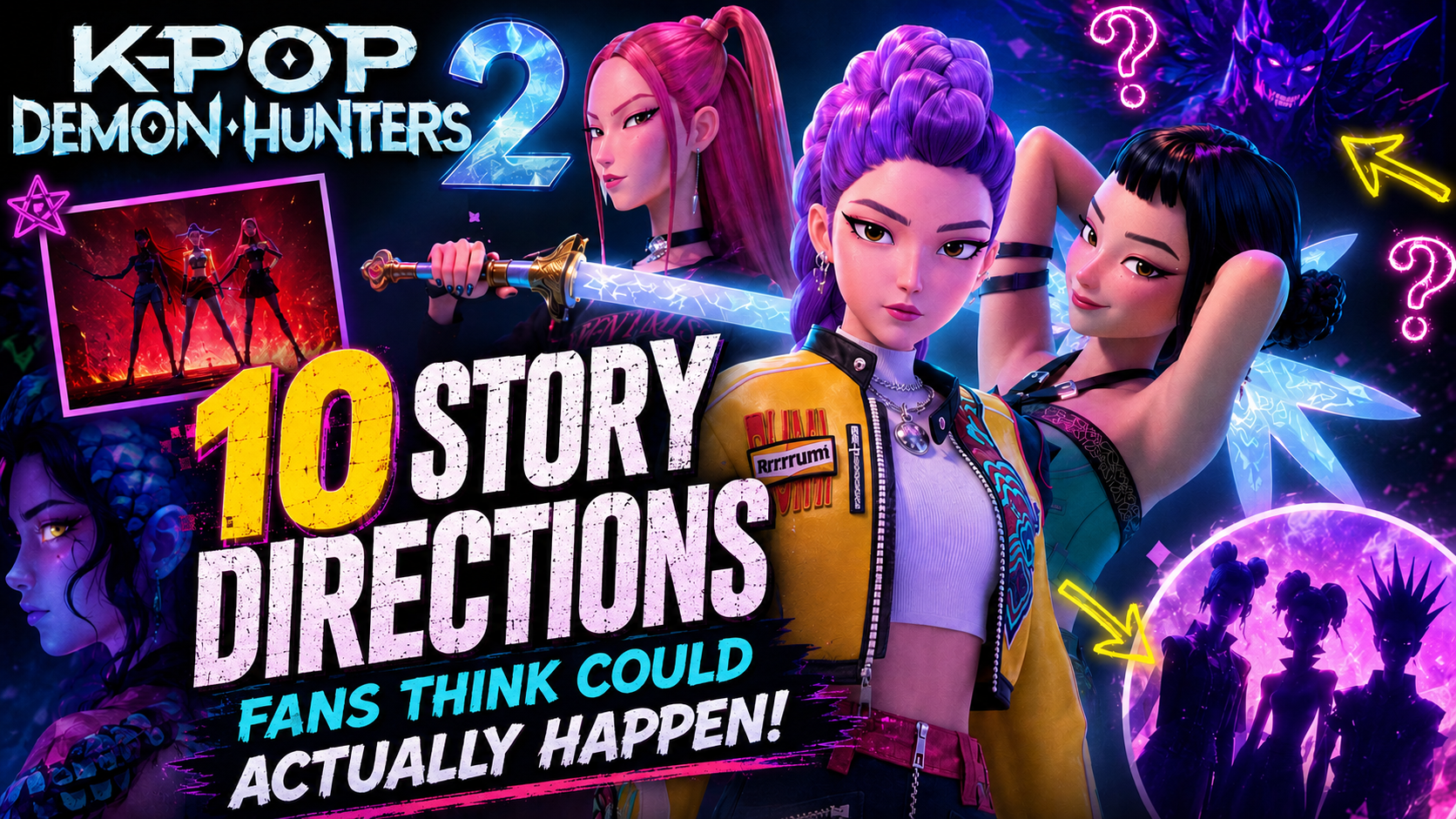
The film follows HUNTR/X, a fictional K-pop girl group made up of Rumi, Mira and Zoey. On stage, they are polished pop stars. Behind the scenes, they are demon hunters protecting the world through music. Their biggest threat comes from the Saja Boys, a rival boy band with a much darker purpose. That setup gives the movie its fun surface, but the details behind it are what make fans keep talking.
One of the biggest reasons KPop Demon Hunters stands out is that it is not just using K-pop as decoration. The film is deeply connected to Korean cultural ideas and supernatural imagery. Creator and co-director Maggie Kang has spoken about wanting to make a film that celebrated Korean culture, especially from the perspective of someone born in Korea and raised in North America. That matters because the movie is not simply saying “K-pop is popular, let’s use that.” It is using K-pop as a modern doorway into older Korean stories, symbols and fears.
The Saja Boys are one of the best examples of this. On the surface, they look like a stylish rival boy band. But the word “Saja” connects to Jeoseung Saja, Korean grim reaper-like figures associated with death and the afterlife. That makes them much more interesting than basic “evil idols.” They are not just competing for streams and fans. They are idolized versions of death messengers, using charm, music and fandom to draw people away from HUNTR/X and weaken the world’s protection.
That detail also makes their songs feel different. “Soda Pop” is not only a catchy villain song. According to Netflix’s interview with Danny Chung of THEBLACKLABEL, the song was designed to be “annoyingly addictive.” That is perfect for the Saja Boys. Their music is supposed to feel like sugar, temptation and danger at the same time. It works because the song itself becomes part of their threat. They do not only attack with monsters. They attack with an earworm.
The movie’s demons are also more specific than they first appear. Maggie Kang has explained that the dokkaebi-inspired demons drew from traditional Korean masks and architectural motifs, while other creature designs were shaped by how they needed to move in animation. That means the monsters are not just random fantasy designs. They are built from Korean visual language, then adapted for fast, expressive animated action. This is why the demon world feels different from a standard Hollywood monster movie.
The cleverest part of the story may be how it turns fandom into literal power. In the world of KPop Demon Hunters, HUNTR/X does not only perform because they want fame. Their connection with fans helps protect the world. The Honmoon, the magical barrier linked to their mission, depends on that energy. When the Saja Boys try to steal HUNTR/X’s fans, it is not just a chart battle. It is a supernatural attack. The film takes something real K-pop fans understand — streaming, cheering, loyalty and emotional connection — and turns it into fantasy logic.
That is also why HUNTR/X feels more real than many fictional pop groups. They are not a simple copy of one group. The creative team drew from the wider language of K-pop: the styling, choreography, comeback energy, group dynamics and different generations of idol culture. Fans may see hints of BLACKPINK, TWICE, ITZY or older girl groups, but HUNTR/X works because they feel like a collage of K-pop history rather than a one-to-one parody.
The soundtrack is another major reason the movie crossed over. The music was created with serious pop and K-pop talent, including people connected to THEBLACKLABEL and major hit-making teams. That is why the songs do not feel like “fake movie songs.” They are structured like real comeback tracks, but they also move the plot forward. “Golden,” especially, became the emotional centre of the film. It sounds triumphant, but underneath the shine is pressure, fear and self-discovery.
That pressure is tied most strongly to Rumi. Netflix’s soundtrack breakdown explains that Rumi’s struggle with her half-demon identity affects the way she relates to the group’s music. When a song becomes too aggressive toward demons, it creates an emotional conflict because Rumi is hiding something that could change how Mira and Zoey see her. Suddenly, the music is not only about fighting evil. It is about shame, secrecy and the fear of being rejected by the people closest to you.
That is what gives KPop Demon Hunters more emotional weight than expected. The movie could have been a fun action-musical and nothing more. Instead, it uses the idol concept to explore the pressure of being perfect in public while hiding pain in private. Rumi, Mira and Zoey are superheroes, but they are also performers carrying expectations from fans, their team and themselves. In that sense, the demon-hunting fantasy becomes a heightened version of idol pressure.
Fans also love the real K-pop Easter eggs scattered through the film. Netflix has highlighted several, including TWICE members Jeongyeon, Jihyo and Chaeyoung being involved in a version of “Takedown.” There are also nods to TWICE and even a Business Proposal connection through the use of “Love Maybe” during Rumi and Jinu’s first meeting. These details make the film rewarding on rewatch because fans can go back and spot the real-world K-pop and K-drama references hiding inside the animation.
The success of the film then created something unusual: fictional idol groups became real pop culture forces. HUNTR/X and the Saja Boys do not exist as actual groups, but their songs charted, trended and built fandoms as if they did. “Golden” became a breakout hit and the soundtrack made major chart history. That created a strange but fascinating effect where fans were stanning fictional characters, voice performers, singers and songwriters all at once.
The numbers show just how big the film became. Netflix lists KPop Demon Hunters as its most popular movie of all time, with 325.1 million views in its first 91 days and more than 541 million hours viewed. That places it above huge Netflix titles like Red Notice, Carry-On and Don’t Look Up. It also became more than a streaming hit. Netflix ran sing-along screenings, merchandise followed and the soundtrack became part of the real pop conversation.
What makes all of this impressive is that the film’s success did not come from one thing only. It was not only the K-pop concept. It was not only the animation. It was not only the songs. It worked because all the pieces supported each other: Korean folklore gave the world depth, K-pop gave the story energy, the music gave fans something to replay and the emotional character arcs gave the movie a reason to matter.
That is why the confirmed sequel makes so much sense. Netflix has announced that Rumi, Mira and Zoey will return, with Maggie Kang and Chris Appelhans also returning to direct. That means the story is no longer just a one-off animated hit. It is becoming a franchise built around a world that still has plenty of space to grow.
The most interesting thing about KPop Demon Hunters is that it looks simple from a distance. Idols fight demons. Good songs. Cool animation. But the closer you look, the more layered it becomes. The Saja Boys are rooted in Korean death mythology. The monsters are shaped by folk imagery. The music is engineered like real K-pop. The fandom is part of the magic system. And Rumi’s story turns a bright pop fantasy into something more personal.
That is why fans keep returning to it. KPop Demon Hunters is not just a colourful movie about pop stars with weapons. It is a story about culture, identity, performance, fear and the strange power of being loved by millions of people who only see the version of you on stage.
About the author : NerdiPop