
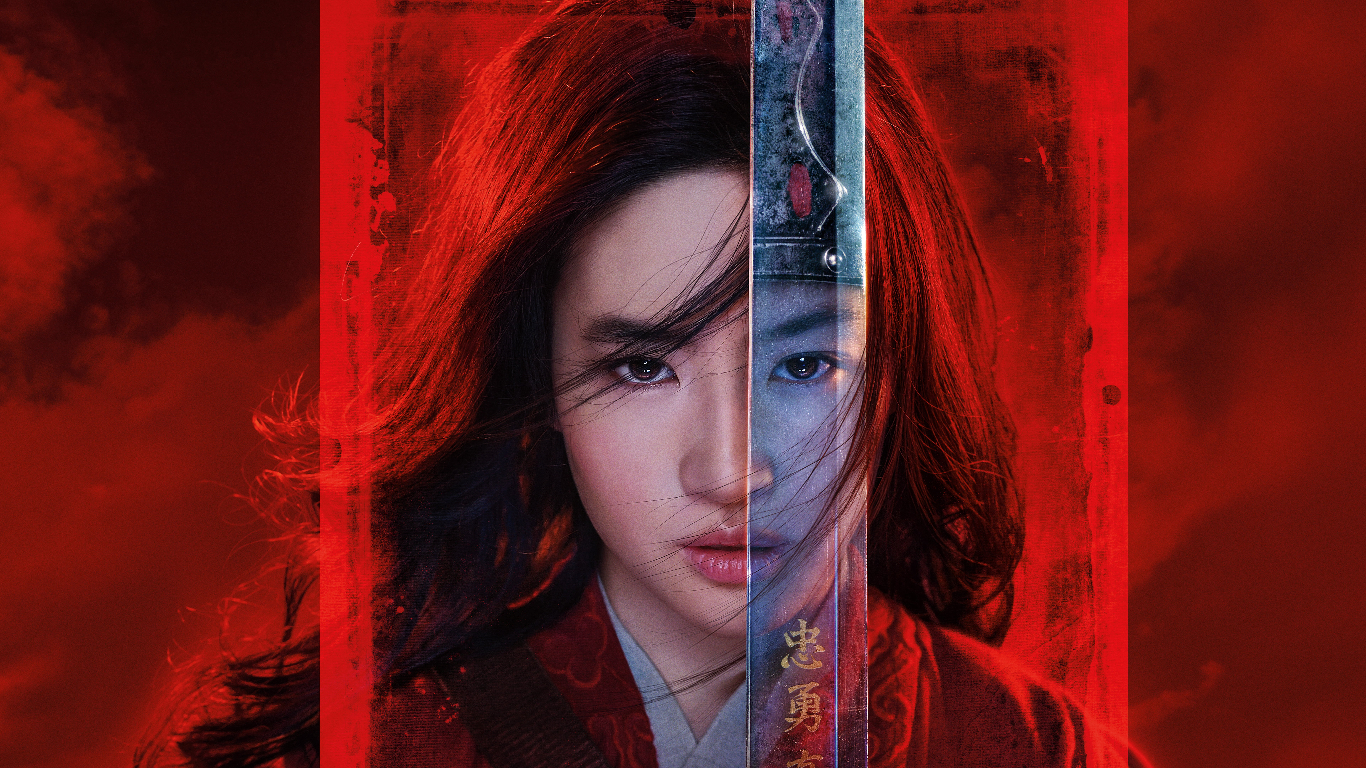
Is Disney’s Mulan REALLY Based on a REAL Person?
Disney’s Mulan (1998) is a beloved animated film inspired by a Chinese legend. In the movie, Fa Mulan is a brave and resourceful young woman who disguises herself as a man to take her ailing father’s place in the Imperial Army. Living in a society that forbids women from joining the military, she risks everything to protect her family and uphold honour. With the help of her comical dragon companion, Mushu, and her quick thinking, Mulan not only survives the harsh training but plays a pivotal role in defending China from a Hun invasion. Along the way, she gains the respect of her comrades—and the admiration of Captain Li Shang.
Not in the mood to read? Watch here.
While Disney presents Mulan’s tale as one of empowerment, romance, and heroism—with musical numbers and light-hearted moments—it’s a fictionalised retelling that borrows elements from ancient Chinese history and poetry.
The Real Story

The story of Mulan actually originates from a 6th-century Chinese poem, The Ballad of Mulan (《木蘭辭》), which predates the Disney version by over a thousand years. In the original ballad, Hua Mulan is a dutiful daughter who volunteers to serve in the army in her father’s place during a time of war. Disguised as a man, she serves with distinction for twelve years, earning great respect and rewards—but she declines all honours and simply returns home to resume her life.
The poem is unique for its time, portraying a strong, selfless woman who defies gender norms—not for fame or romance, but out of loyalty and love for her family. Notably, the original legend contains no dragon sidekick, no romance subplot, and no comedic elements—just quiet courage and sacrifice.
Was Mulan a real person?
Although The Ballad of Mulan is widely regarded as a work of fiction, some scholars believe it may have been loosely inspired by real historical women warriors. One such figure is Fu Hao, a formidable general and high priestess during China’s Shang Dynasty (circa 1200 BCE). As the consort of King Wu Ding, Fu Hao led multiple successful military campaigns, commanded over 13,000 troops, and held significant political and religious influence. Her tomb, uncovered in the 1970s, contained bronze weapons and artifacts that underscored her exceptional power.
While there is no direct evidence linking Fu Hao to the Mulan legend, she remains one of ancient China’s most remarkable women—suggesting that tales of female military leaders were not purely mythical.
Legacy and honour
Despite the poetic origins and the fictional flair added by Disney, the story of Mulan continues to resonate globally as a symbol of courage, devotion, and resilience. Her legacy even extends beyond Earth—a crater on Venus is named “Hua Mulan” by the International Astronomical Union in her honour.
For a cultural twist on the familiar Disney song, listen to “Reflection” (Mandarin Version) performed by Liu Yifei, star of Disney’s 2020 live-action remake.
Share this article
